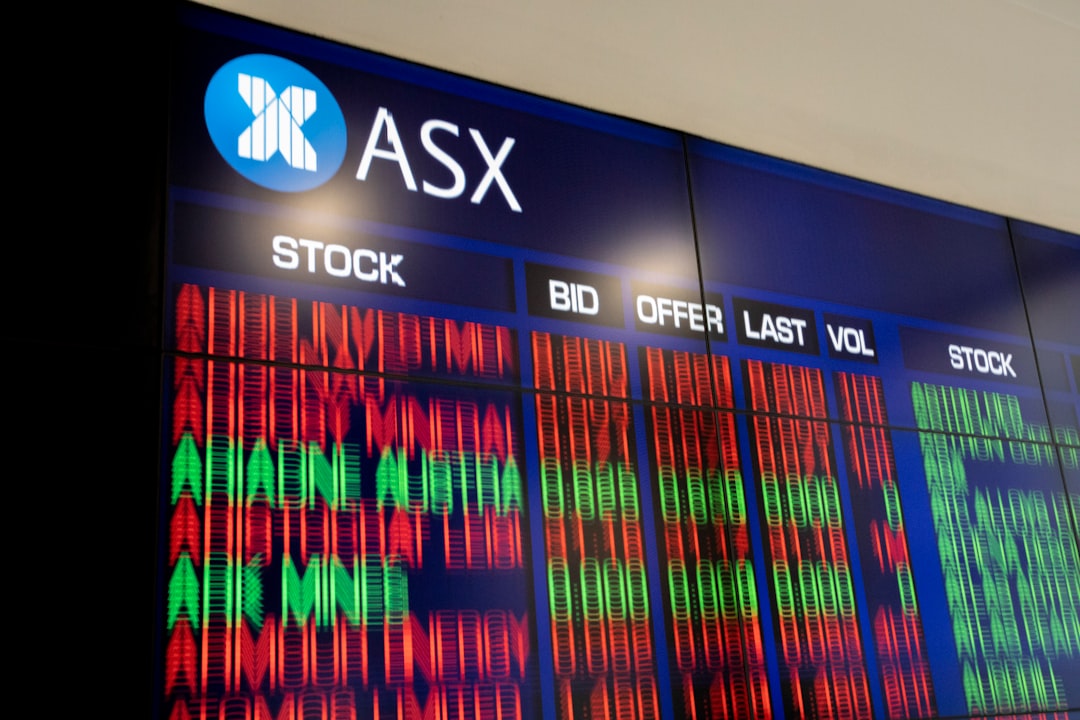
Asia accounts for 28% of global forex retail volume, yet broker options vary dramatically by country — India restricts leverage to 1:50 under SEBI, Japan caps at 1:25 under JFSA, while offshore brokers serving Thailand or Vietnam offer up to 1:2000. Spreads on EUR/USD range from 0.0 pips on ECN accounts to 2.5 pips on standard accounts. This comparison evaluates each broker on regulation, local payment support (UPI, GrabPay, bank transfer), and execution quality during the Asian session.
Table of Contents
Introduction
In the fast-evolving world of financial trading, best forex broker asia 2026 is a topic every Asian trader must understand thoroughly. The forex market, with its daily volume exceeding $7.5 trillion, offers extraordinary opportunities for those who prepare adequately, but also presents significant risks for those who trade without proper knowledge and risk management.
This comprehensive guide provides the tools and understanding you need to navigate this crucial aspect of trading. We will explore theoretical foundations, practical applications, and advanced strategies that you can implement immediately in your daily trading routine, regardless of your current experience level.
The Asian trading landscape has transformed dramatically in recent years. India alone has seen a 300% increase in retail forex participation since 2022, while markets in Indonesia, Philippines, and Vietnam are experiencing similar growth trajectories. Understanding these regional dynamics gives you an edge that traders in other regions simply do not have.
Before we dive deep, remember that trading carries inherent risks. No article or course can guarantee profits. What we can offer is knowledge to make more informed decisions. We recommend supplementing this guide with our Best Forex Broker India for a broader perspective on the trading ecosystem.
Broker Comparison at a Glance
| Broker | Min Deposit | Spreads From | Leverage | Rating |
|---|---|---|---|---|
| Exness | $1 | 0.0 pips | 1:2000 | 9.5/10 |
| XM | $5 | 0.6 pips | 1:1000 | 9.0/10 |
| AvaTrade | $100 | 0.9 pips | 1:400 | 8.5/10 |
Key Concepts You Must Master
To get the most from this guide, you need to understand certain fundamental concepts. The first and most important is the decentralized structure of the forex market, where banks, institutions, and retail traders interact through a global electronic network without a single centralized price. This means prices can vary slightly between liquidity providers, and quality brokers like Exness aggregate multiple sources to ensure the best execution prices.
The risk-reward relationship is another foundational pillar. Successful traders do not win on every trade. Instead, they maintain a favourable ratio where average gains exceed average losses. A 1:2 risk-reward ratio means you can be profitable even with a 40% win rate, which dramatically reduces the psychological pressure to be right on every single trade.
Liquidity determines execution quality. Major pairs like EUR/USD, GBP/USD, and USD/JPY offer the tightest spreads and minimal slippage. For Indian traders, the USD/INR pair is available on domestic exchanges through NSE and BSE, while international brokers provide access to 50-100+ pairs with varying liquidity profiles.
Leverage is perhaps the most misunderstood concept in forex trading. While it allows you to control large positions with small capital, it amplifies both profits and losses equally. Professional traders rarely use more than 1:20 effective leverage, even when brokers offer ratios as high as 1:2000. Starting with conservative leverage of 1:50 or less is strongly recommended for beginners.
Volatility, commonly measured by the Average True Range (ATR), indicates the expected magnitude of price movements. High-volatility periods during economic news releases offer greater opportunities but also greater risks. The ability to identify and navigate these periods separates consistently profitable traders from those who blow their accounts.
Detailed Analysis
Let us examine the technical aspects of best forex broker asia 2026 in greater depth. Technology has democratized market access in ways that were unimaginable a decade ago. A trader in Mumbai, Jakarta, Manila, or Dhaka now has access to the same platforms, data feeds, and analytical tools as an institutional operator on Wall Street or in the City of London.
MetaTrader 5 has emerged as the gold standard for retail trading, offering over 80 built-in technical indicators, 21 timeframes, market depth visualization, strategy backtesting, and algorithmic trading capabilities. Its mobile version delivers nearly identical functionality on smartphones, enabling traders to manage positions from anywhere with an internet connection. For more on this topic, see our AvaTrade review.
Recent economic data reveals that Asian economies are at a fascinating inflection point. The Reserve Bank of India has begun a rate-cutting cycle, while the Bank of Japan has moved away from negative interest rates. These divergent monetary policies create significant opportunities in currency pairs involving Asian currencies, particularly USD/INR, USD/JPY, and cross-pairs like INR/JPY.
Market structure analysis on higher timeframes (weekly and monthly charts) reveals consolidation patterns in several major pairs, which historically precede significant directional moves. Traders positioned correctly for these breakouts can capture substantial trend-following profits that more than compensate for the false signals encountered during the consolidation phase.
The integration of artificial intelligence into trading workflows is accelerating rapidly. AI tools can process massive datasets, identify statistical patterns, and generate real-time alerts. While they cannot replace human judgement for discretionary trading, they significantly enhance a trader's analytical capabilities and can reduce the time spent on manual chart analysis by up to 70%.
Geopolitical factors are playing an increasingly important role in currency markets. US-China trade relations, tensions in the South China Sea, India-Pakistan dynamics, and ASEAN economic integration all influence capital flows in the Asian forex market. Maintaining awareness of these macro factors through reliable news sources is essential for avoiding unexpected adverse moves.
Practical Strategies
Let us move from theory to actionable strategies. The first strategy we recommend for Asian traders is trend trading on 4-hour and daily charts. This approach captures directional market moves and is ideal for traders who cannot monitor screens throughout the entire trading day. Use 50 and 200-period exponential moving averages (EMAs) on the daily chart to identify the primary trend, then enter on pullbacks to the 50 EMA on the 4-hour chart with candlestick confirmation.
The second strategy leverages the Asian session range. Between 00:00 and 09:00 GMT, many major pairs trade within defined ranges. Traders can buy near support and sell near resistance with tight stops and controlled risk. The breakout of the Asian range during the London open (08:00 GMT) often provides the first high-probability trade of the day.
For those who prefer fast-paced trading, scalping during the London-New York overlap (13:00-17:00 GMT) offers multiple opportunities in short timeframes. This strategy demands ultra-low spreads like those on Exness Raw Spread accounts and iron discipline to cut losses quickly. It is not recommended for beginners due to the intense focus and quick decision-making required.
The breakout strategy involves identifying consolidation levels and trading the price break when it exits the range with volume. London session breakouts (between 08:00 and 10:00 GMT, or 13:30-15:30 IST for Indian traders) tend to be the most reliable of the day, often setting the directional tone for the next 8-12 hours.
Regardless of which strategy you choose, the 1-2% rule is non-negotiable: never risk more than 1-2% of your total capital on a single trade. With a $500 account, your maximum loss per trade should be $5-10. This rule ensures you can survive losing streaks without catastrophic damage to your account. Read our guide on Forex Broker Asia for more details on implementing these concepts.
Recommended Tools
The right tools can significantly enhance your trading performance. MetaTrader 5 remains our primary platform recommendation, with advanced charting, an integrated economic calendar, robust backtesting, and support for automated trading via Expert Advisors (EAs).
TradingView complements MT5 with its intuitive interface, active community of traders sharing ideas, and superior drawing tools. Its alert system lets you receive notifications when price reaches specific levels, freeing you from being glued to the screen during every trading session. See also: Exness vs Pepperstone comparison.
Forex Factory is indispensable for its economic calendar. It displays all scheduled events with their expected impact, previous values, and market consensus. Setting it to your local timezone (IST for India, ICT for Thailand, WIB for Indonesia) is the first step every Asian trader should take.
Myfxbook allows you to connect your trading account and generate detailed performance statistics: win rate, maximum drawdown, profit factor, mathematical expectancy, and dozens of additional metrics. This data-driven approach to performance review is invaluable for identifying strengths and weaknesses in your trading approach.
For real-time news, Bloomberg, Reuters, and Investing.com provide continuous coverage of market-moving events. Having access to these sources during your trading sessions allows you to react quickly to unexpected developments that could impact your open positions.
Common Mistakes to Avoid
The most destructive mistakes among Asian traders are entirely preventable if you identify them early. Over-leveraging tops the list: using 1:500 or higher leverage turns every trade into a high-stakes gamble where a minor adverse move can liquidate your entire account in minutes.
Trading without a written plan is the second most damaging error. Impulsive decisions based on emotions, social media tips, or gut feelings are a recipe for consistent losses. A documented plan with clear entry rules, exit criteria, position sizing formulas, and risk parameters is your shield against impulsive behaviour.
Revenge trading — the urge to immediately recover losses with larger, riskier positions — is responsible for more blown accounts than any other single factor. After a loss, the best action is to step away from the screen, analyse what went wrong objectively, and return to the market with a clear mind. Some of the best traders we know have a strict rule: three consecutive losses triggers a mandatory 24-hour break.
Ignoring the economic calendar is a mistake even experienced traders make. A technically perfect setup can turn into an instant loss if it coincides with an unexpected employment report or a surprise central bank decision. Always check the economic calendar before opening a new position, and avoid trading during high-impact releases unless your strategy is specifically designed for news trading.
Failing to keep a trading journal prevents continuous improvement. Without detailed records of every trade, it is impossible to identify error patterns and systematically correct them. Spend 10 minutes at the end of each session documenting your trades, the reasoning behind them, and the lessons learned.
Step-by-Step Guide to Getting Started
Follow these concrete steps to begin your trading journey from Asia. First, dedicate 4-6 weeks to pure education: read our guides on TradingZenith, study classic books like Trading in the Zone by Mark Douglas, and build a solid foundation in both technical and fundamental analysis.
Second, open a free demo account on Exness and practice for a minimum of 3 months. Set a realistic balance that matches what you plan to deposit in real trading, and operate it as if it were real money. Focus on a single currency pair (EUR/USD recommended) and a single strategy until your equity curve shows consistency.
Third, write your trading plan before going live. Define your strategy, entry and exit rules, position sizing methodology, maximum risk per trade (1-2%), pairs to trade, and trading hours. Print it and keep it visible next to your screen as a constant reminder of your rules. Learn more in our best trading apps India 2026.
Fourth, open your live account with a deposit you can afford to lose entirely — ideally between $50 and $200. Trade with micro-lots of 0.01 and focus on executing your plan with discipline, not on how much money you make. Process consistency matters far more than individual trade outcomes at this stage.
Fifth, review your trading journal weekly. Identify which trades followed your plan and which did not. Calculate your key metrics: win percentage, average risk-reward ratio, and maximum drawdown. Adjust your approach based on objective data, not feelings or hunches.
Conclusion
Mastering the concepts covered in this guide is a fundamental step in your development as a trader. The forex market offers extraordinary opportunities for those who prepare adequately, and Asian traders have access to the same tools and markets as professionals anywhere in the world.
Success in trading is not a destination but a continuous journey of learning and adaptation. Markets evolve constantly, and the traders who survive and thrive are those who adapt to new conditions while maintaining discipline in their risk management and fidelity to their trading plan.
Do not rush, do not risk more than you can afford to lose, and never stop learning. With patience, discipline, and the right tools, you can build a consistent and profitable trading operation over the long term. The market will always be there tomorrow, and every day brings new opportunities for those who are prepared.
Frequently Asked Questions
What do I need to get started with Best Forex Broker Asia 2026?
You need basic education about the topic, an account with a regulated broker like Exness, and a solid risk management strategy. We recommend starting with a free demo account to practice before risking real money. The minimum deposit at Exness is just $10.
Is forex trading safe for Asian traders?
Yes, provided you choose a broker regulated by top-tier authorities such as the FCA, CySEC, or ASIC. Brokers like Exness offer negative balance protection, segregated client funds, and are independently audited for maximum safety of your capital.
How much money do I need to start forex trading?
With brokers like Exness you can start with as little as $10. However, we recommend starting with at least $100-200 USD for adequate margin and proper risk management using micro-lots of 0.01.