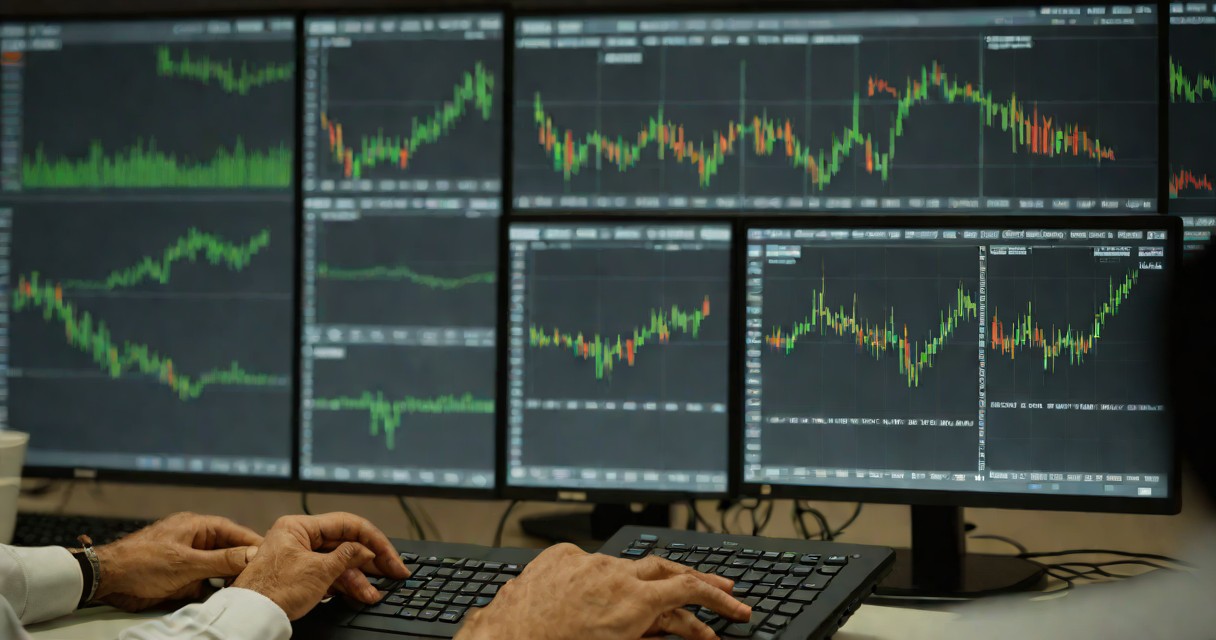
Nifty 50 is the heartbeat of Indian financial markets, and mastering its price behavior is the single most valuable skill an Indian trader can develop. Unlike global forex pairs that trade around the clock with distributed liquidity, Nifty concentrates its entire daily range into a compressed 6-hour and 15-minute window from 09:15 to 15:30 IST. This concentration creates repeatable intraday patterns that disciplined traders exploit consistently. Whether you trade Nifty futures, options, or ETFs, understanding these patterns gives you a structural advantage.
Morning Session Strategy: The Opening Range Breakout
The first 15 minutes after market open at 09:15 IST set the tone for the entire day. During this window, institutional orders, overnight global developments, and pre-open auction imbalances resolve into a defined price range. The Opening Range Breakout strategy marks the high and low of the 09:15 to 09:30 candle on the 15-minute Nifty chart. A close above the range high signals a long entry; a close below the range low signals a short.
Place your stop-loss at the opposite boundary of the opening range. Target 1.5 to 2 times the range width for your take-profit. On trending days, Nifty moves directionally away from the opening range with conviction, and this strategy captures 60 to 100 points of movement. On ranging days, the breakout fails and your stop gets hit for a defined loss. Historical data shows this pattern produces profitable signals on approximately 55 to 60 percent of trading days, with winners averaging 1.8 times the size of losers.
Enhance the strategy by filtering with the gap direction. When Nifty opens with a gap up and breaks above the opening range, the probability of continuation increases to roughly 65 percent. When Nifty gaps in one direction but breaks the opening range in the opposite direction, treat these as lower-probability setups and reduce position size accordingly.
Midday Consolidation: Range-Bound Strategies
Between 11:30 and 13:30 IST, Nifty typically enters a consolidation phase as institutional order flow thins during lunch hours. This creates a well-defined range that mean-reversion strategies exploit effectively. Identify the range using the highest high and lowest low of the 11:30 to 12:30 IST period on the 15-minute chart. Sell near the range high with a target at the range midpoint; buy near the range low with the same midpoint target.
The key risk in this approach is a genuine breakout disguised as a range-bound move. Use volume as your filter: if a candle approaching the range boundary carries volume more than 1.5 times the session average, step aside and wait for clarification. Low-volume touches of the range extremes are high-probability mean-reversion entries. This midday strategy typically yields 20 to 40 points per trade with tight 15 to 20 point stop-losses.
Combine the midday range with Bollinger Bands on the 5-minute chart. When price touches the lower Bollinger Band within the established range and RSI shows bullish divergence, the long setup has a higher success rate. The confluence of range support and Bollinger Band support creates a multi-factor entry that filters out marginal signals. For more on this topic, see our Indian stock market vs forex.
Afternoon Momentum: The 14:00 IST Trend Resumption
European traders begin their day around 13:30 to 14:00 IST, and their order flow often reignites Nifty momentum after the midday lull. Watch for a directional breakout from the midday consolidation range coinciding with the European open. This afternoon trend tends to persist into the closing hour, making it one of the most reliable intraday patterns on Nifty.
Apply the VWAP (Volume Weighted Average Price) as your directional filter after 14:00 IST. If Nifty trades above VWAP and breaks the midday range to the upside, the long bias is confirmed by institutional demand. If it trades below VWAP and breaks down, shorts carry higher conviction. VWAP acts as an institutional reference price that large players use for execution benchmarking, making it a natural support and resistance level.
The closing auction between 15:00 and 15:30 IST introduces additional considerations. If you are holding intraday positions, decide whether to exit before the closing auction or carry the position into overnight risk. For pure intraday traders, flatten all positions by 15:15 IST to avoid slippage during the closing minutes. For traders comfortable with overnight gaps, strong closing-hour trends often continue into the next morning opening.
Swing Trading Nifty: Multi-Day Approaches
Nifty swing trading captures moves lasting 3 to 15 trading days and works well for traders who cannot monitor markets continuously during market hours. Use the daily chart with 20 and 50 EMA as your primary trend filters. When the 20 EMA is above the 50 EMA, look for buying opportunities on pullbacks. When the 20 EMA is below the 50 EMA, seek shorts on rallies.
The ideal swing trade entry occurs when Nifty pulls back to the 20 EMA on the daily chart and forms a bullish reversal candle such as a hammer, engulfing pattern, or morning star. Enter on the next daily open with a stop-loss below the reversal candle low. Target the previous swing high for a reward-to-risk ratio of at least 2 to 1. This approach captures the medium-term trend impulses that characterize Nifty movement between major support and resistance zones.
Sector rotation analysis enhances Nifty swing trading. When banking stocks lead the advance with BankNifty outperforming Nifty, the rally has institutional backing and is more likely to sustain. When IT and pharma defensive sectors lead, the move is often a rotation rather than a genuine trend, and swing trade targets should be more conservative. Use the Nifty sectoral indices as a relative strength dashboard to assess the quality of each swing setup.
Risk Management Specific to Nifty Trading
Nifty futures carry a lot size of 25 units, meaning each point of movement equals Rs 25 per lot. At a Nifty level of 24,500, one lot represents a notional value of approximately Rs 6,12,500. Margin requirements range from Rs 80,000 to Rs 1,20,000 depending on volatility conditions. Never trade more lots than your risk tolerance permits based on your stop-loss distance. You may also find our options trading guide for India helpful.
Gap risk is a significant concern for overnight Nifty positions. Global developments during US and European market hours can cause Nifty to open 100 to 300 points away from the previous close. Limit overnight position size to ensure that even a 2 percent gap would not exceed your maximum loss tolerance. On days preceding major events like RBI policy, US Federal Reserve decisions, or Indian election results, reduce overnight exposure further or hedge with protective options.
Correlation between Nifty and global indices affects risk management. Nifty shows approximately 0.6 to 0.7 correlation with the S&P 500 on a daily basis. If you hold both Nifty and US index positions, treat them as partially correlated exposures. Similarly, if you trade Nifty alongside USD/INR or Indian banking stocks, recognize the overlapping risk factors and size positions accordingly.
Tools and Platforms for Nifty Trading
For Nifty futures and options, Zerodha Kite, Upstox Pro, and Angel One provide the most popular Indian trading platforms with charting, order management, and analytics. For supplementary forex trading on pairs like USD/INR through international brokers, XM MT5 offers institutional-grade charting and execution. See our trading app comparison for a feature-by-feature breakdown. For a detailed breakdown of fees and features, see our XM broker review for Indian traders.
TradingView serves as an excellent charting complement for Nifty analysis. Its Pine Script language lets you code custom indicators and backtest strategies against Nifty historical data. Many Indian traders use TradingView for analysis and their broker platform for execution. The free tier provides adequate functionality for most retail traders, while the paid plans add more indicators and real-time data feeds.
For traders who want to extend beyond Nifty into global markets, combining a domestic broker account for NSE derivatives with an international account on XM or Exness for forex provides comprehensive market access. This dual-account approach lets you trade Nifty during Indian hours and forex majors during London and New York sessions, effectively extending your trading window across the full 24-hour cycle.
Frequently Asked Questions
What is the best time to trade Nifty?
The first 30 minutes after open (09:15-09:45 IST) and the afternoon session from 14:00 IST onward offer the strongest momentum. The midday period from 11:30 to 13:30 IST is typically range-bound and suits mean-reversion strategies. Related reading: ETF trading in India.
How much margin is required for Nifty futures?
One lot of Nifty futures requires approximately Rs 80,000 to Rs 1,20,000 in margin depending on current volatility. Intraday margin through discount brokers can be lower with MIS (Margin Intraday Square-off) product types.
Can I trade Nifty through international brokers?
International brokers like XM and Exness do not offer direct Nifty trading. However, you can trade India-related instruments like USD/INR and use domestic brokers for Nifty. Combining both gives you comprehensive market coverage.
Is Nifty options trading better than futures?
Options provide defined risk since your maximum loss is the premium paid, making them suitable for traders with smaller accounts. Futures offer simpler pricing and no time decay but carry unlimited risk. Most professional Indian traders use both instruments depending on the market outlook.
Risk Disclaimer: Trading involves high risk. Educational content only. Contains affiliate links.