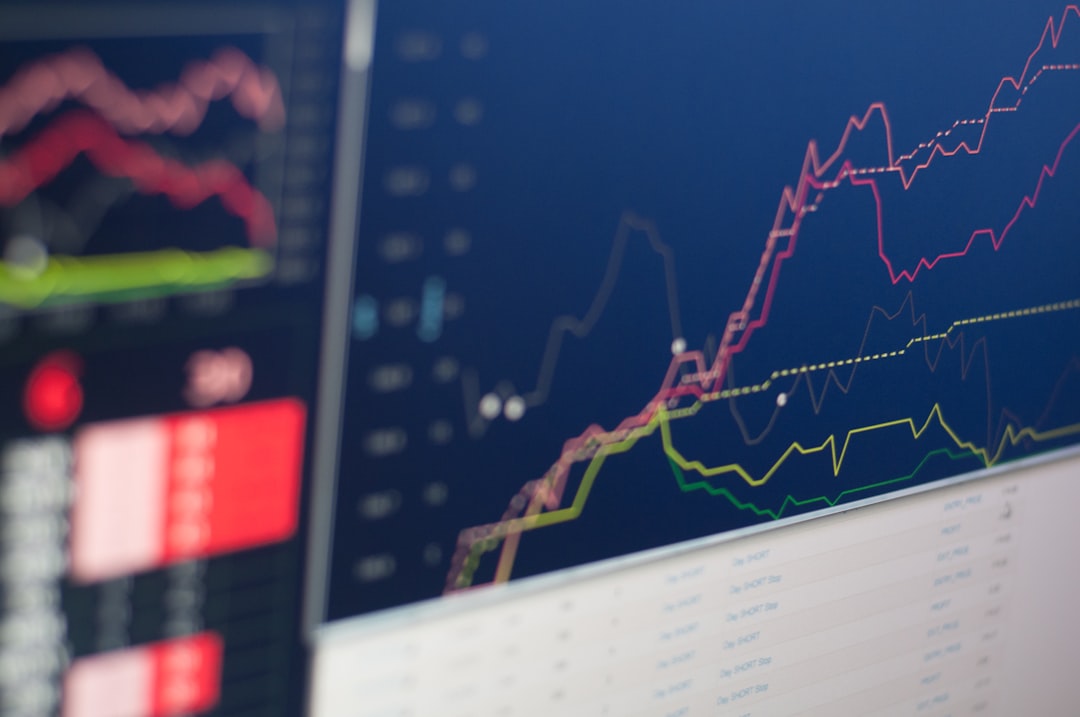
Economic data releases move forex markets more violently than any technical pattern. A single Non-Farm Payrolls number that deviates from consensus can move EUR/USD 100 pips in 30 seconds. An unexpected RBI rate decision can send USD/INR on a 200-pip sprint before Indian traders finish their chai. Understanding how to trade around these events — or when to stay out entirely — is essential knowledge for any forex trader operating from India or Asia. The economic calendar is not a passive reference tool; it is an active trading weapon when wielded with proper strategy and risk management.
The Most Important Events for Asian Traders
For Indian and Asian forex traders, these events generate the most tradeable volatility: US Non-Farm Payrolls (first Friday monthly, 19:00 IST), US CPI (monthly, 18:00 IST), Federal Reserve Interest Rate Decision (8 times yearly, 00:00 IST), RBI Monetary Policy Decision (bi-monthly, 10:00 IST), Bank of Japan Decision (8 times yearly, 08:00 IST), ECB Interest Rate Decision (6 times yearly, 18:15 IST), and China GDP and PMI data (various schedules).
Each event affects specific currency pairs primarily. NFP and CPI move all USD pairs. Fed decisions move all markets. RBI decisions move USD/INR and Indian equities. BoJ decisions move all JPY pairs. ECB decisions move EUR pairs. China data moves AUD, NZD, and Asian currencies. Know which pairs are affected by which events to focus your attention and avoid taking unrelated positions that might be caught in collateral volatility.
IST timing for these events creates both advantages and challenges. NFP at 19:00 IST and CPI at 18:00 IST fall during convenient evening hours. The Fed decision at 00:00 IST requires staying up late or setting up automated responses. RBI at 10:00 IST catches Indian traders during normal business hours. BoJ at 08:00 IST aligns with the Indian morning. Build your weekly schedule around the event calendar rather than trying to trade every session identically.
Pre-Event Strategy: Positioning Before the Release
Pre-event positioning involves taking a directional trade before the data release based on your assessment of likely outcomes. This approach carries higher risk because the actual data may deviate from expectations in either direction. The reward is capturing the full initial move rather than reacting after it has already happened.
A disciplined pre-event approach: analyze the consensus forecast and the range of estimates from different economists. If the consensus is tightly clustered, a surprise in either direction will generate a larger move. If estimates are widely dispersed, the market has already priced in uncertainty and the actual move may be muted regardless of the number. Position yourself in the direction of the trend going into the event, using half your normal position size and a wider stop-loss of 1.5 to 2 times normal.
Pre-event option strategies provide defined risk: buy a straddle on AvaOptions ahead of NFP, purchasing both a call and put with the same strike and expiry. You profit if the move exceeds the combined premium cost, regardless of direction. This strategy is particularly effective for events with binary outcomes like central bank decisions where the market must move sharply in one direction. Related reading: scalping strategies for Asian markets.
Post-Event Strategy: Trading the Reaction
Post-event trading waits for the data release and then trades the market reaction. This approach sacrifices the initial move but provides clarity on direction. Wait 5 to 15 minutes after the release for the initial spike and retracement to settle. Enter in the direction of the initial spike if price retraces 30 to 50 percent of the spike without fully reversing. This partial retracement entry captures the continuation move that typically follows the initial reaction.
The 30-minute rule: after NFP or CPI release, wait for the first 30-minute candle on EUR/USD to close. If the candle closes in the direction of the initial spike with a body larger than 50 percent of its total range, enter in that direction with a stop below the 30-minute candle low (for longs) or above its high (for shorts). Target 1.5 times the candle range. This filter eliminates the whipsaw that frequently occurs in the first 5 to 10 minutes after major releases.
For RBI decisions at 10:00 IST, the initial USD/INR reaction is often followed by a significant move in Nifty futures as equity traders process the rate decision implications. If RBI holds rates when a cut was expected, USD/INR spikes higher and Nifty drops. This two-stage reaction across instruments creates a trading opportunity on the second-order move (Nifty) after the first-order move (USD/INR) provides the directional signal. See our India legal guide for more context.
Straddle and Fade Strategies for News Events
The straddle order strategy places pending buy-stop and sell-stop orders equidistant from the current price 2 minutes before the release. Set buy-stop 20 pips above and sell-stop 20 pips below the current EUR/USD price. When the data releases, the directional spike triggers one order. Set the take-profit at 30 to 40 pips from entry and stop-loss at 20 pips. Remove the untriggered pending order immediately.
The fade strategy trades against the initial spike when the data release produces an overreaction. After a strong initial move, look for signs of exhaustion: a doji or pin bar on the M5 chart within 15 minutes of the release, volume declining on the continuation, or a divergence between the move and the fundamental implications of the data. Enter in the opposite direction with a tight stop beyond the spike extreme.
Fade strategies are higher risk because they trade against the prevailing momentum. Use them only when the initial spike is clearly disproportionate to the data deviation. An NFP miss of 10,000 jobs should not move EUR/USD 80 pips; if it does, a 30 to 40 pip retracement is likely. An NFP miss of 150,000 jobs justifying an 80-pip move should not be faded. Calibrate your fade decisions based on the magnitude of the data surprise relative to the price reaction.
Risk Management for News Trading
Spreads widen dramatically during major releases. EUR/USD spreads on standard accounts can expand from 1.5 pips to 5 to 10 pips during NFP. USD/INR spreads on MCX can widen even further during RBI decisions. Factor spread widening into your entry calculations and stop-loss placement. What appears to be a 20-pip stop in normal conditions may execute at 25 to 30 pips when spreads are inflated. For more on this topic, see our breakout trading strategy guide. For a detailed breakdown of fees and features, see our XM broker review for Indian traders.
Slippage is unavoidable during high-impact events. Stop-loss orders may fill 5 to 15 pips beyond the specified level on extremely volatile releases. Accept slippage as a cost of news trading and size your positions to accommodate worst-case fill scenarios. If your stop is 20 pips but may slip to 30 pips, calculate your position size based on the 30-pip worst case.
Never risk more than 1 percent of your account on any single news trade. The binary nature of data releases means that even well-analyzed pre-event positions can result in instant full-stop losses. A string of 3 to 5 news trade losses should not exceed 3 to 5 percent of your account. If news trading is a component of your broader strategy, allocate no more than 20 percent of your total risk budget to event-driven trades.
Building Your Economic Calendar Routine
Every Sunday evening, review the coming week economic calendar. Mark high-impact events on your schedule with specific IST times. Identify which currency pairs each event affects and decide in advance whether you will trade the event or sit it out. Having a pre-planned approach eliminates the impulsive decision-making that occurs when a trader sees a sudden 50-pip spike and jumps in without preparation.
Use ForexFactory, Investing.com, or the MT5 built-in calendar as your primary reference. These platforms display events filtered by impact level (high, medium, low) and allow customization by currency. Set up mobile alerts for high-impact events 30 minutes before the release so you have time to review your plan and set up orders. XM and Exness MT5 both support push notification alerts linked to calendar events.
Maintain a news trading journal separate from your regular trading journal. Track: the event, the consensus forecast, the actual result, the deviation, the initial price reaction in pips, your trade if any, and the outcome. After 50 to 100 events, your database will reveal which events consistently produce tradeable moves, which are typically muted, and which your personal strategies are most effective at exploiting. See our fundamental analysis guide for deeper context.
Frequently Asked Questions
What is the best news event to trade from India?
US Non-Farm Payrolls at 19:00 IST provides the most reliable volatility with EUR/USD moves of 50 to 100 pips common. The timing is convenient for Indian traders. US CPI at 18:00 IST is similarly productive. RBI decisions at 10:00 IST are the most important for USD/INR traders. For more on this topic, see our price action trading techniques.
Should beginners trade news events?
Beginners should avoid trading during news events for the first 3 to 6 months. Instead, observe how markets react to data releases and note patterns in your journal. When ready, start with post-event strategies (trading 15 to 30 minutes after the release) which carry less whipsaw risk than pre-event positioning.
How much does the spread widen during NFP?
EUR/USD spreads can expand from 1.5 pips to 5 to 10 pips on standard accounts during NFP. Raw spread accounts on Exness may see spreads of 2 to 5 pips. Spreads normalize within 5 to 15 minutes. Always use limit orders rather than market orders during news releases.
Can I use a bot to trade news events?
Yes. MT5 Expert Advisors can be programmed to execute straddle orders before news releases. XM and Exness both allow EA-based news trading with no restrictions. However, automated news trading requires careful programming to handle spread widening, slippage, and partial fills correctly.
Risk Disclaimer: Trading involves high risk. Educational content only. Contains affiliate links.