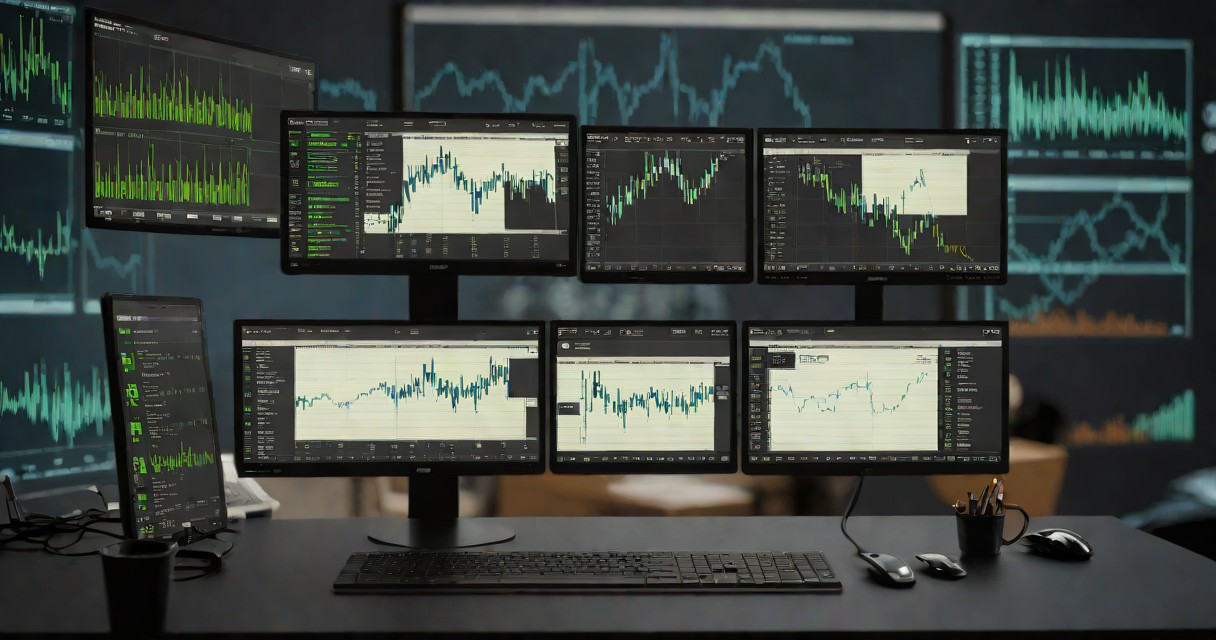
Money management is the unsexy truth behind every successful trading career. Traders in Mumbai trading rooms, Singapore hedge funds, and Tokyo prop desks all know that a mediocre strategy with excellent money management outperforms a brilliant strategy with poor money management every single time. The statistics are unforgiving: over 70 percent of retail forex traders lose money, and the primary cause is not bad analysis or wrong market direction but inadequate capital management that turns recoverable losses into account-destroying drawdowns.
The 1-2 Percent Rule: Non-Negotiable Foundation
Never risk more than 1 to 2 percent of your trading account on any single trade. This rule is not conservative or aggressive; it is mathematical survival. At 2 percent risk per trade, you would need 34 consecutive losing trades to lose half your account. At 5 percent risk per trade, only 14 consecutive losses accomplish the same destruction. The probability of 34 consecutive losses with any reasonable strategy is astronomically low. The probability of 14 consecutive losses during a strategy drawdown or market regime change is uncomfortably plausible.
Calculate your position size before every trade using this formula: position size equals account risk divided by trade risk in pips multiplied by pip value. With a Rs 5,00,000 account risking 1 percent (Rs 5,000) on a 30-pip stop on EUR/USD where 1 standard lot equals approximately Rs 850 per pip, your position size is 5,000 divided by (30 multiplied by 850) which equals 0.19 standard lots. Round down to 0.19 or 0.15 lots. Never round up.
The percentage risk should be consistent across all trades. Many traders unconsciously increase risk on trades they feel confident about and decrease risk on uncertain setups. This behavior undermines the statistical edge of your system because your largest positions will be on high-confidence trades that may not actually have higher win rates than your standard setups. Equal risk per trade lets your edge play out statistically without emotional interference.
Managing Drawdowns: The Recovery Mathematics
Drawdown is the percentage decline from your account peak to its lowest point before recovering. A 10 percent drawdown requires an 11 percent gain to recover. A 20 percent drawdown requires 25 percent. A 50 percent drawdown requires 100 percent, which is doubling your remaining capital. The asymmetry of drawdown recovery is the most important mathematical concept in trading. Preventing large drawdowns is exponentially easier than recovering from them.
Set a maximum drawdown limit and enforce it ruthlessly. A 6 percent weekly drawdown limit means you stop trading for the remainder of the week if your account drops 6 percent from Monday opening balance. A 15 percent monthly drawdown limit means the same for the month. These circuit breakers prevent catastrophic spirals where losses trigger emotional responses that generate larger losses.
After hitting a drawdown limit, use the enforced break productively. Review your journal to determine whether the drawdown resulted from normal strategy variance, a market regime change, or emotional trading errors. If it is normal variance, resume trading at your standard risk level when the new period begins. If it is a regime change, adjust your strategy or reduce risk to 0.5 percent per trade until your strategy regains effectiveness. If emotional, address the root cause before resuming. Related reading: forex trading basics for Indian traders.
Capital Allocation Across Strategies and Accounts
Diversify your trading capital across uncorrelated strategies and instruments. Allocate 60 percent of capital to your primary strategy with the longest track record and highest confidence level. Allocate 25 percent to a secondary strategy that performs well in different market conditions. Keep 15 percent in reserve as dry powder for exceptional opportunities or to replenish a strategy account after a drawdown period.
For Indian traders with both domestic and international accounts, the allocation might look like: 50 percent to NSE futures and options trading through Zerodha, 35 percent to international forex trading through XM or Exness, and 15 percent in a savings account as reserve capital. This dual-market approach provides access to uncorrelated return streams across Indian equities and global forex markets. For a detailed breakdown of fees and features, see our XM broker review for Indian traders.
Rebalance allocations quarterly based on each strategy actual performance. If your forex strategy has outperformed your Nifty strategy over the past quarter, resist the temptation to shift capital from Nifty to forex. Performance tends to mean-revert, and the strategy that outperformed recently may underperform going forward. Maintain your target allocations through quarterly rebalancing, adding to underperforming strategies and trimming outperforming ones.
Scaling Positions: Adding to Winners
Scaling into positions means adding to a winning trade as it moves in your favor. This technique increases your average position size in winning trades while maintaining small positions in losing trades. The approach naturally creates asymmetric payoffs where winners are larger than losers in absolute position size. Professional traders across Asian institutional desks use scaling extensively.
A practical scaling approach: enter with 50 percent of your planned position at your initial entry point. When price moves in your favor by 1R (one times your initial risk), add the remaining 50 percent and move your stop-loss on the original position to breakeven. Your effective average entry is now slightly worse than the original, but your total risk on the combined position is only the risk on the second entry because the first position is at breakeven.
Never scale into losing positions. Averaging down is the single most destructive habit in trading because it increases your exposure to a trade that the market has already told you is wrong. Each additional lot added to a losing position magnifies the eventual loss when the stop-loss finally triggers. The discipline to add only to winners and cut losers requires overriding a powerful psychological bias, but it is essential for long-term survival.
Compounding and Realistic Growth Expectations
Compound growth is the mechanism through which consistent small gains build substantial wealth over time. A trader who earns 3 percent monthly on a Rs 5,00,000 account generates Rs 15,000 in the first month. After one year of 3 percent monthly compounding, the account grows to approximately Rs 7,13,000. After three years, it reaches Rs 14,43,000. After five years, Rs 29,23,000. The initial capital has nearly six-folded without any additional deposits. You may also find our understanding forex spreads helpful.
These calculations assume no withdrawals and consistent monthly returns, which is unrealistic. Real trading produces uneven returns with profitable months, break-even months, and losing months. A more realistic projection includes 4 percent average monthly return during good months, 0 percent during flat months, and negative 2 percent during poor months, with roughly 6 good months, 3 flat months, and 3 poor months per year. This scenario still produces approximately 20 to 25 percent annual returns after accounting for variability.
Beware of the compounding trap: as your account grows, maintaining the same percentage return becomes harder because position sizes increase and the psychological pressure of managing larger rupee amounts affects decision-making. Many traders perform well at Rs 1 to 5 lakh account sizes but struggle when accounts reach Rs 20 lakh or more. Address this by graduating position sizes gradually and maintaining the same risk percentage rather than switching to fixed rupee risk amounts.
Money Management for Indian Traders: Practical Considerations
Factor in the cost of LRS remittances when calculating your forex trading returns. If you pay Rs 1,500 in wire transfer fees to deposit Rs 1,00,000 to your international broker, that represents a 1.5 percent drag on your initial capital. Minimize this by making fewer larger deposits rather than frequent small ones. Depositing Rs 5,00,000 once costs the same Rs 1,500 fee, reducing the drag to 0.3 percent.
Currency conversion effects can enhance or erode your INR-denominated returns. If you deposit USD 1,200 when USD/INR is 84 (costing Rs 1,00,800) and withdraw USD 1,500 when USD/INR is 86, you receive Rs 1,29,000. Your USD return was 25 percent but your INR return was approximately 28 percent due to the 2.4 percent rupee weakening. Conversely, rupee strengthening reduces your INR returns. Factor this currency overlay into your performance calculations.
Tax obligations reduce your net returns. At a 30 percent tax slab rate, a gross annual return of 30 percent becomes approximately 21 percent after tax. Include tax provisions in your compounding calculations to avoid overestimating future account growth. Set aside 30 percent of realized profits in a separate account for quarterly advance tax payments. See our tax guide for filing details.
The 3 tools I use to trade crypto in India
Bitget for execution (FIU-IND registered, automatic tax statements). MEXC for altcoin access (2,800+ tokens, India accepted). Koinly for 30% VDA tax + 1% TDS compliance. The stack built around India's regulatory reality.
See My India StackFrequently Asked Questions
How much should I risk per forex trade?
Risk 1 to 2 percent of your total trading capital per trade. For a Rs 5,00,000 account, this means Rs 5,000 to Rs 10,000 maximum risk per position. Beginners should start at 0.5 to 1 percent until they demonstrate consistent profitability over at least 3 months. For more on this topic, see our pip value calculator.
What is a safe maximum drawdown limit?
Most professional traders set maximum drawdown limits at 15 to 20 percent of peak account balance. Weekly limits of 5 to 6 percent and daily limits of 2 to 3 percent provide additional short-term circuit breakers that prevent emotional spiraling.
How long does it take to double a trading account?
At 3 percent average monthly compounding, doubling takes approximately 24 months. At 5 percent monthly, approximately 15 months. These assume no withdrawals and consistent performance. Real-world doubling typically takes longer due to losing months and partial withdrawals.
Should I withdraw profits or reinvest them?
Reinvest for compounding during the first 12 to 18 months while building your account to a target size. Once you reach your target, withdraw 30 to 50 percent of monthly profits and reinvest the remainder. Regular withdrawals provide tangible reward and reduce the pressure of managing an ever-growing account balance.
Risk Disclaimer: Trading involves high risk. Educational content only. Contains affiliate links.