What Are Renko Charts?
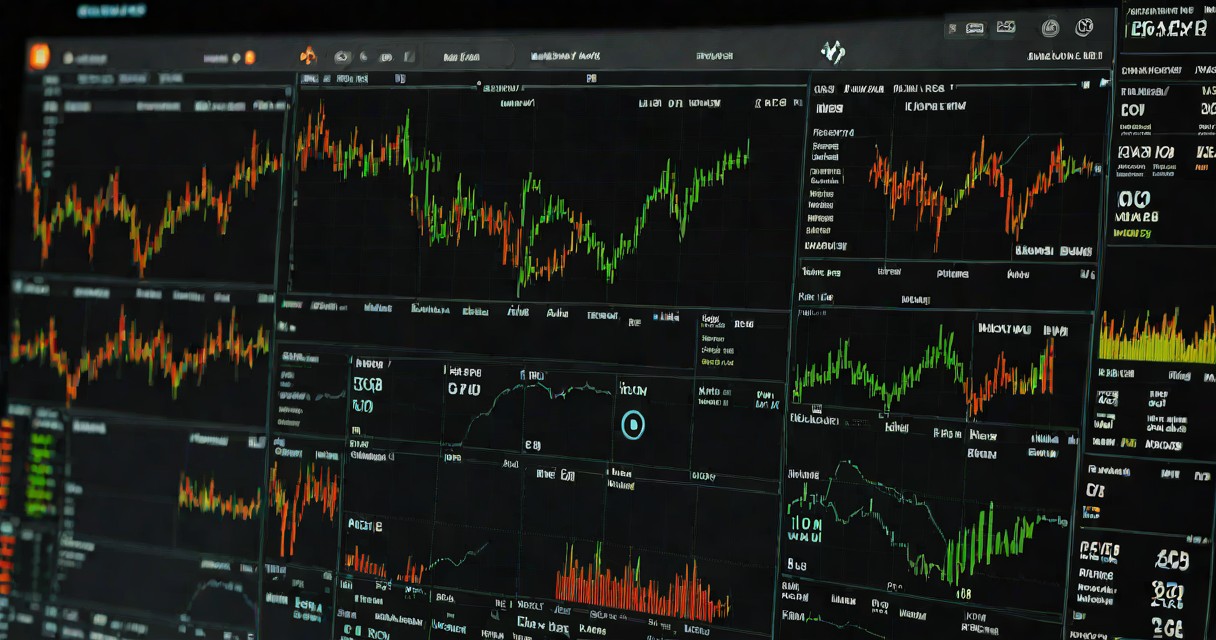
Renko charts ignore time completely. Instead of plotting one candle per 5 minutes or 15 minutes, Renko creates a new brick only when price moves a fixed amount. On Nifty, a 20-point Renko chart creates a new green brick when price rises 20 points and a new red brick when price falls 20 points. If Nifty moves sideways for 3 hours, no new bricks form.
Why traders love Renko: It filters out market noise. On a regular 5-min chart, you see every tick — whipsaws, false breakouts, and random wicks. Renko shows only meaningful moves. The result is cleaner trends, fewer false signals, and less stress.
The trade-off: Renko charts lag. By the time a new brick forms, price has already moved 20+ points. You'll never catch the exact top or bottom. But you'll ride trends longer and avoid getting chopped up in sideways markets.
Renko Brick Size Settings for Indian Markets
The brick size determines sensitivity. Too small = too many bricks (noise). Too large = too few signals (miss trades). Here's what works:
| Instrument | Scalping | Intraday | Swing |
|---|---|---|---|
| Nifty 50 | 10 pts | 20 pts | 50 pts |
| Bank Nifty | 20 pts | 40 pts | 100 pts |
| Reliance/TCS | 5 pts | 10 pts | 25 pts |
| EUR/USD (forex) | 5 pips | 10 pips | 25 pips |
Pro tip: Use ATR (Average True Range, 14-period) to calibrate. Set your Renko brick size to 50-75% of the daily ATR. If Nifty's ATR is 150 points, a 75-100 point brick works for swing. If intraday ATR is 30 points per hour, a 20-point brick captures the meaningful moves.
Strategy 1: Renko Trend Reversal
The simplest and most reliable Renko strategy.
Rules:
- Set Nifty Renko to 20-point bricks
- BUY when you see 2 consecutive green bricks after a series of red bricks (trend reversal from down to up)
- SELL when you see 2 consecutive red bricks after a series of green bricks
- SL: the low of the first green brick (for longs) or high of the first red brick (for shorts). This is typically 20-40 points.
- Target: ride until 2 bricks of opposite color form (exit signal = reverse of entry signal)
Why 2 bricks, not 1: A single opposite brick could be a pullback within the trend. Two consecutive bricks confirm the reversal. This filter eliminates 50% of false signals.
Win rate: ~55% on Nifty 20-point Renko. But the average winner is 3-5 bricks (60-100 points) while the average loser is 2 bricks (40 points). The R:R makes it profitable.
Strategy 2: Renko + Moving Average
Adds a trend filter to avoid trading against the bigger move.
Rules:
- Apply a 10-period SMA (Simple Moving Average) on the Renko chart
- Only BUY when price is above the SMA (uptrend)
- Only SELL when price is below the SMA (downtrend)
- Entry: 2-brick reversal signal (from Strategy 1) that aligns with the MA direction
- Exit: price crosses back through the SMA OR 2 opposite bricks form
Why this is better: In a strong uptrend, the basic strategy would have you selling every 2-brick pullback — fighting the trend. The MA filter keeps you on the right side. You miss some early reversal trades but avoid the losses from counter-trend trades.
Strategy 3: Renko Breakout From Range
Works on days when Nifty is range-bound in the morning and breaks out in the afternoon.
Rules:
- Between 9:15 — 11:00 AM, if Renko bricks alternate green-red-green-red (no trend), mark the range: highest green brick top and lowest red brick bottom
- Wait for a 3-brick breakout beyond the range (3 consecutive green bricks above the range top, or 3 reds below)
- Enter on the close of the 3rd breakout brick
- SL: the range midpoint (typically 30-60 points)
- Target: 5 bricks from entry (100 points on 20-pt Renko)
Why 3 bricks: A 1-brick breakout fails 60% of the time. A 2-brick breakout fails 40%. A 3-brick breakout follows through 65%+ of the time. The extra confirmation is worth the slightly worse entry price.
Best days: Wednesday expiry (morning range → afternoon breakout) and days with afternoon economic data releases (RBI, IIP, CPI).
How to Set Up Renko Charts
Zerodha Kite: Kite doesn't natively support Renko charts. Use Zerodha Streak or switch to TradingView for Renko analysis, then execute on Kite.
TradingView: Open any chart → click the timeframe dropdown → scroll down to "Renko" → set brick size (e.g., 20 for Nifty). TradingView has the best Renko implementation with indicator overlay support.
MetaTrader 5 (Exness/XM): MT5 supports Renko via custom indicators. Download "Renko Charts" from MQL5 marketplace (free). Apply to Nifty CFD or any forex pair.
For international markets traded through Exness, Renko works beautifully on EUR/USD and XAU/USD during the London-NY overlap session (6:30 PM — 10:30 PM IST).
Renko vs Candlestick: When to Use Which
- Use Renko when: You keep getting stopped out on regular charts. Renko filters the noise that whipsaws your SL. Also great for identifying clean support/resistance levels — Renko SR is based on actual price movement, not random wicks.
- Use Candlestick when: You need precise timing (options expiry, news events). Renko lags by definition — if you need to enter within 2 minutes of a news release, use regular candles.
- Best combination: Use Renko for direction (what to trade), candlestick for entry timing (when to trade). If 20-pt Renko shows an uptrend, switch to 5-min candles to find the exact pullback entry.