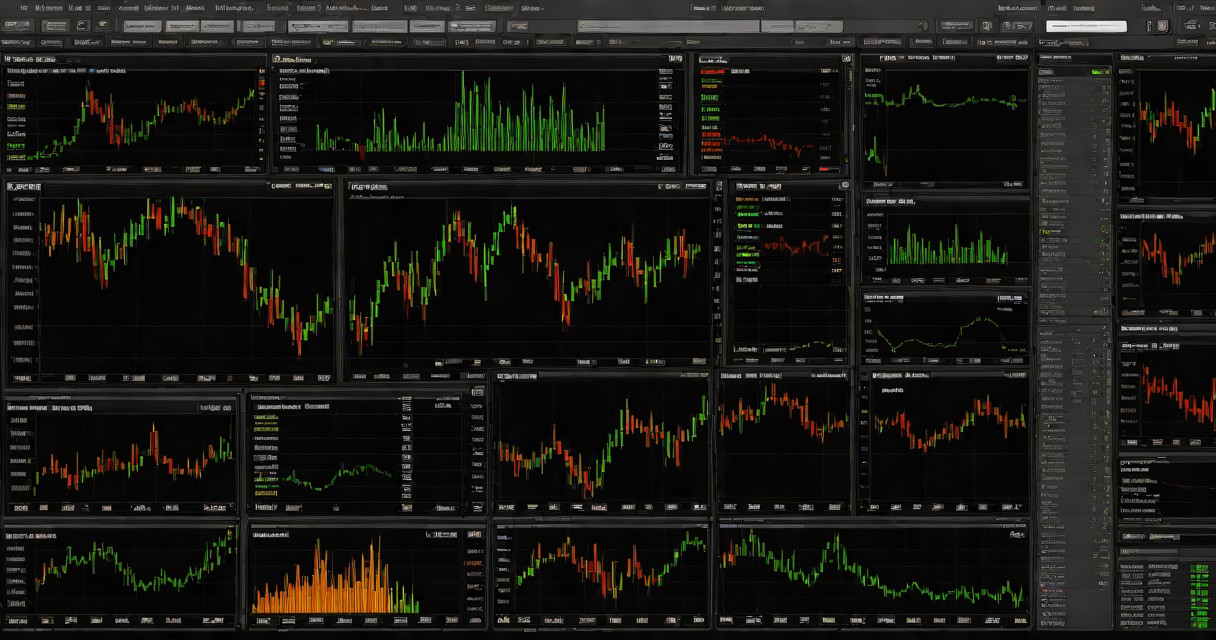
USD/INR is India's most actively traded currency pair, available on both SEBI-regulated exchanges (NSE, BSE) and international broker platforms. Understanding this pair requires knowledge of RBI monetary policy, India's trade balance dynamics, foreign institutional investor (FII) flows, and global risk sentiment. For Indian traders, USD/INR offers a natural connection to the domestic economy that foreign pairs cannot match. For a detailed breakdown of fees and features, see our XM broker review for Indian traders.
What Drives USD/INR
RBI Policy: The Reserve Bank of India's monetary policy decisions directly impact the rupee. Rate hikes strengthen INR (USD/INR falls); rate cuts weaken it. RBI also intervenes directly in the forex market to prevent excessive INR volatility, creating unique price dynamics. Oil Prices: India is a major oil importer. Rising oil prices increase India's import bill, weakening INR. Falling oil prices support the rupee. FII Flows: Foreign investment flows into Indian equities and bonds strengthen INR. Outflows weaken it. Monitor FII buy/sell data from NSE for signals.
Technical Strategy: Daily Trend Following
Apply 50/200 EMA on Daily USD/INR chart. Trade in trend direction. Enter on H4 pullbacks to 50 EMA with reversal confirmation. Stops: 30-60 paise from entry. Target: 80-150 paise. USD/INR trends tend to be persistent due to structural economic factors, making trend following highly effective. For more strategies, see our intraday guide.
RBI Intervention Awareness
RBI actively manages INR volatility through direct market intervention. When USD/INR approaches key psychological levels (83.00, 84.00, 85.00), expect potential RBI action. This intervention creates support and resistance levels that pure technical analysis cannot predict. Monitor RBI reserve data and intervention reports for clues. See our legal framework guide and broker review.
Strategy 2: RBI Policy Trade Setup
RBI announces monetary policy decisions six times per year, with each announcement creating predictable USD/INR volatility patterns. The strategy exploits the fact that the market often prices in expectations before the announcement and then reverses or accelerates after the actual decision.
Pre-announcement positioning (2-3 days before): Analyse market consensus for the rate decision. If consensus expects a hold but inflation data suggests a possible hike, USD/INR tends to drift lower (INR strengthening on hike anticipation). Position a small long INR trade (short USD/INR) with stops above the pre-drift high. If consensus expects a cut, the opposite applies.
Post-announcement reaction trade: Wait 15 minutes after the RBI statement release for the initial spike to settle. If the decision matches consensus, fade any overreaction — USD/INR typically reverts toward pre-announcement levels within 2-4 hours. If the decision surprises, trade in the direction of the surprise with tight stops. RBI rate cuts that surprise the market can move USD/INR 50-80 paise in a single session.
Risk parameters: Limit exposure to 1% of equity per RBI trade. Use a hard stop of 40 paise for exchange-traded futures. The asymmetric risk profile — small loss on consensus outcomes, large gain on surprises — makes this a positive expected value setup over multiple RBI cycles.
Strategy 3: Oil-INR Correlation Trade
India imports over 80% of its crude oil, making the INR one of the most oil-sensitive currencies globally. When Brent crude rises by $5 per barrel, USD/INR typically appreciates by 30-50 paise over the following 1-2 weeks as the trade deficit widens. This lagged correlation creates a tradeable setup.
Entry signal: When Brent crude breaks above a 20-day high by $3 or more, go long USD/INR (expecting INR weakness). Enter on the NSE futures at market close on the breakout day. Stop loss: Below the day's low minus 20 paise. Target: 60-100 paise, typically reached within 5-10 trading days.
Reverse signal: When Brent drops below a 20-day low by $3 or more, short USD/INR (expecting INR strength from reduced import costs). The INR strengthening reaction to falling oil prices tends to be faster — often completing within 3-5 days — because RBI uses lower oil prices as an opportunity to rebuild forex reserves, which amplifies the move.
This strategy pairs well with the EMA trend-following approach. When both the oil signal and EMA alignment agree on direction, the win rate historically improves. Conflicting signals (oil rising but USD/INR in a downtrend on EMAs) suggest sitting out. For more on commodity-currency correlations, see our oil trading guide. You may also find our Bank Nifty options strategies helpful.
NSE vs International Broker: Where to Trade USD/INR
Indian traders have two distinct paths for trading USD/INR, each with different regulatory frameworks, costs, and risk profiles.
NSE/BSE (SEBI-regulated): USD/INR futures on NSE trade in lots of $1,000 with expiry dates on the last working day of each month. Margin requirement is approximately Rs 2,500-3,000 per lot. Trading hours are 09:00 to 17:00 IST, Monday to Friday. The maximum leverage available is roughly 1:30 to 1:40 depending on the broker. Profits are taxed as business income (Section 43(5) of the Income Tax Act). The advantage is full SEBI protection, INR-denominated trading, and lower counterparty risk.
International brokers (CFDs): Platforms like XM, Exness, and AvaTrade offer USD/INR as a CFD with leverage up to 1:500, 24/5 trading hours, and no fixed lot sizes. Spreads on international platforms average 15-30 pips for USD/INR, wider than the 1.25-2.5 paise spread on NSE. The advantage is flexibility in position sizing, extended hours, and access to other USD pairs for hedging. The disadvantage is no SEBI protection and wider spreads. Read our broker comparison for specific platform analysis.
For beginners, NSE USD/INR futures are the recommended starting point. The Rs 2,500 margin per lot means you can take meaningful positions with Rs 10,000-25,000 in capital while staying within SEBI's regulatory framework. International platforms make more sense for experienced traders who need higher leverage, after-hours access, or want to trade USD/INR alongside other currency pairs in a single account.
USD/INR Risk Management Rules
USD/INR carries unique risks that standard forex risk management does not fully address:
RBI intervention risk: The RBI can and does intervene without warning to cap INR depreciation or appreciation. These interventions can move the pair 30-60 paise against your position in minutes. Always use hard stop-loss orders rather than mental stops. Market orders may suffer slippage during interventions, so consider limit stop orders that trigger at your price or better.
Gap risk on NSE: Since NSE USD/INR futures close at 17:00 IST while the global forex market continues trading, overnight gaps are common. A significant global event — US employment data, geopolitical crisis, oil shock — can cause USD/INR to open 20-50 paise away from the previous close. Never hold a position overnight without accounting for gap risk in your position sizing.
Position sizing formula: For NSE futures, limit risk to 1% of trading capital per trade. If your capital is Rs 100,000 and your stop loss is 30 paise (Rs 300 per lot), you can trade a maximum of 3 lots (Rs 100,000 x 1% / Rs 300 = 3.3, rounded down). This formula prevents any single trade from causing meaningful damage to your account.
Correlation awareness: If you hold both USD/INR long and short positions on Indian equity indices (Nifty, Bank Nifty), understand that INR weakness often accompanies equity selloffs due to FII outflows. Your positions may move in the same direction simultaneously, doubling your effective exposure. Track net INR exposure across all instruments.
Key Economic Data for USD/INR Traders
Beyond RBI policy and oil prices, several data releases create tradeable USD/INR moves. Mark these on your calendar:
- India CPI (monthly, ~12th): Higher-than-expected inflation weakens INR (USD/INR rises) as it signals potential rate hikes but also erodes purchasing power. Impact: 15-30 paise.
- India Trade Balance (monthly, ~15th): A wider deficit weakens INR. Watch the oil import component specifically — if oil imports spike, the INR impact is larger. Impact: 10-25 paise.
- FII Flow Data (daily, NSE website): Consistent FII buying supports INR; persistent selling weakens it. Track the 5-day rolling net flow for trend signals rather than reacting to single-day data.
- US Non-Farm Payrolls (first Friday of month, 18:00 IST): Strong US jobs data strengthens USD globally, pushing USD/INR higher. This report impacts USD/INR during international trading hours, creating overnight gap risk for NSE positions.
- US Fed Rate Decision (8 times per year, 23:30 IST): Fed rate hikes strengthen USD against INR. The impact typically shows up as a gap in the next NSE session. Reduce position size ahead of Fed meetings.
USD/INR Options on NSE: Hedging and Income Strategies
Beyond futures, NSE offers USD/INR options that enable strategies unavailable through directional trading alone. Options premiums on USD/INR are relatively low due to the pair's moderate volatility, making them affordable for retail traders.
Covered call (income strategy): If you hold a long USD/INR futures position expecting gradual INR depreciation, sell an out-of-the-money call option 50-70 paise above the current price. You collect the premium (typically Rs 50-100 per lot) as income. If USD/INR stays below the strike, you keep the premium. If it rises above the strike, your futures position profits while the call is assigned — limiting upside but guaranteeing a profit above your entry. For more on this topic, see our Indian stock market vs forex.
Straddle (RBI event play): Buy both a call and a put at the current price before an RBI announcement. This costs more in premium but profits regardless of direction if the move is large enough. A straddle around RBI policy days typically requires 40-60 paise of movement to break even. Given that surprise decisions can produce 50-150 paise moves, the risk-reward can be favourable when consensus is uncertain.
Put protection for importers: Indian businesses importing goods priced in USD face INR depreciation risk. Buying USD/INR call options provides insurance — if the rupee weakens, the option profit offsets the higher import cost. This is a legitimate hedging use case that SEBI explicitly permits for underlying exposure. For more on options mechanics, see our options trading guide.
Tax Implications of USD/INR Trading in India
Taxation differs significantly between exchange-traded and international broker trading:
NSE/BSE USD/INR futures and options: Classified as speculative business income under Section 43(5) of the Income Tax Act. Profits are added to your total income and taxed at your applicable slab rate. If you trade frequently, you may opt for presumptive taxation under Section 44AD (6% of turnover for digital transactions). Losses can be set off against other speculative income and carried forward for 4 years.
International broker (CFD) income: Technically reportable as foreign income. The RBI permits outward remittance up to USD 250,000 per financial year under LRS for investment purposes. Profits from international forex trading should be declared in your ITR under "Income from Other Sources" and taxed at your slab rate. Maintain records of all deposits, withdrawals, and trading statements from the international broker.
STT and brokerage: NSE USD/INR futures carry Securities Transaction Tax of 0.0001% on sell-side turnover. Brokerage at discount brokers like Zerodha is Rs 20 per executed order or 0.03% of turnover, whichever is lower. These transaction costs are deductible as business expenses. Review our trading tax guide for detailed ITR filing procedures.
Common USD/INR Trading Mistakes
Fighting RBI intervention: When the pair hits a round number like 84.00 or 85.00 and stalls, it is often because RBI is selling USD to defend that level. Trading against a central bank with $600+ billion in reserves is a losing proposition. If you see the pair repeatedly rejected at a level despite strong USD globally, step aside.
Ignoring spreads on international platforms: A 20-pip spread on USD/INR CFDs means you start every trade down Rs 200 per standard lot. For a pair that moves 20-50 paise daily, this spread consumes a large portion of the potential profit. On NSE, the spread is 1.25-2.5 paise — significantly cheaper for active traders.
Over-leveraging during RBI weeks: Traders who normally risk 1% sometimes increase to 3-5% during RBI announcements, hoping for large moves. This works until the one time the decision is a surprise in the wrong direction. Keep position sizing consistent regardless of event anticipation.
Neglecting the USD side: USD/INR is often analyzed purely through an India lens, but the USD component matters equally. A strong US Dollar Index (DXY) rally will push USD/INR higher even if Indian fundamentals are positive. Always check DXY direction before entering a USD/INR trade. For a broader perspective, see our best forex pairs for Indian traders guide.
USD/INR Seasonal Patterns
USD/INR exhibits recurring seasonal tendencies driven by India's economic calendar. Understanding these patterns provides an edge for timing entries: Related reading: ETF trading in India.
March (financial year-end): INR typically strengthens as companies repatriate foreign earnings and convert USD to INR for tax payments and dividend distributions. USD/INR often drops 50-100 paise between mid-February and late March. This is one of the most reliable seasonal trades.
April-June (new fiscal year): Fresh FII allocation cycles begin, with net inflows supporting INR. Government spending accelerates under the new budget. USD/INR tends to trade in a narrow range or drift lower.
July-September (monsoon season): A weak monsoon hurts agricultural output and rural demand, which can weaken INR through reduced economic activity. Oil demand also peaks during monsoon for transportation and power generation, pressuring the trade balance. USD/INR often grinds higher during this period.
October-December (festival season): Gold imports surge for Diwali and wedding season, widening the trade deficit and weakening INR. This is historically the weakest quarter for the rupee. Combining this seasonal tendency with the oil-correlation strategy creates a particularly reliable setup in years when both oil prices and gold demand are rising simultaneously.
Frequently Asked Questions
Can I trade USD/INR on Indian exchanges?
Yes, USD/INR futures and options are available on NSE and BSE through SEBI-registered brokers. Lot size is $1,000, and trading hours are 09:00-17:00 IST.
What affects USD/INR the most?
RBI monetary policy, oil prices, FII investment flows, US dollar strength, India's trade balance, and global risk sentiment are the primary drivers.
Is USD/INR good for beginners?
USD/INR on Indian exchanges is suitable for Indian beginners due to INR-denominated trading, SEBI regulation, and moderate volatility. International USD/INR CFDs require more experience.
What is the average daily range of USD/INR?
USD/INR typically moves 20-50 paise per day on exchanges. During RBI policy announcements or global risk events, daily ranges can expand to 80-150+ paise.
Risk Disclaimer: Trading involves high risk. Educational content only. Contains affiliate links.