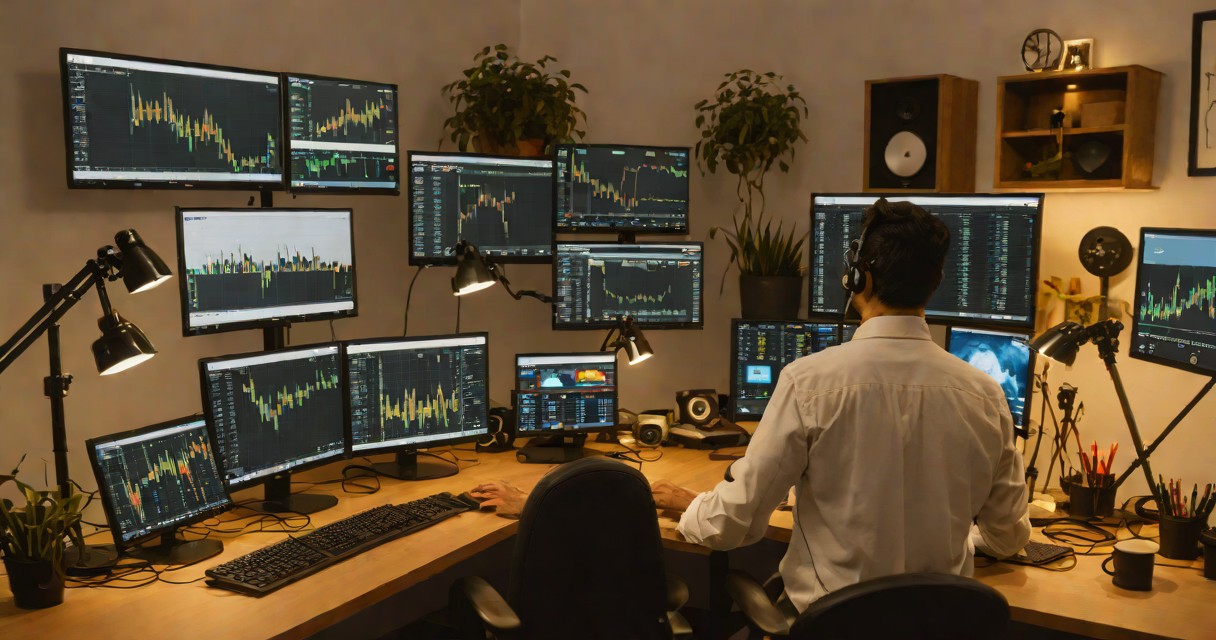
Bangalore's Quant Trading Ecosystem
Bangalore has quietly become India's quantitative trading capital. The city's deep bench of software engineers, data scientists, and machine learning specialists provides the talent pool that quant firms need. Over the past five years, at least 15 dedicated quant trading desks have set up operations in Bangalore, from homegrown firms like Alphabgrep and Quadeye to satellite offices of global players.
The numbers tell the story. India's algorithmic trading share on NSE has crossed 60% of total volume. A significant portion of those algorithms are designed, backtested, and deployed by teams sitting in HSR Layout, Koramangala, and Whitefield. For IT professionals looking to transition, Bangalore offers something no other Indian city can: proximity to both the tech ecosystem and the quant trading industry.
Quant Firms Hiring in Bangalore (2026)
| Firm | Type | Roles | Salary Range (LPA) |
|---|---|---|---|
| Alphabgrep | HFT / Market Making | Quant Dev, Researcher | Rs 30-80 LPA |
| Quadeye | Systematic Trading | Quant Analyst, Dev | Rs 25-60 LPA |
| Tower Research | HFT | C++ Dev, FPGA Eng | Rs 40-1.2 Cr |
| WorldQuant | Alpha Research | Research Consultant | Rs 15-40 LPA |
| Graviton Research | Systematic | Quant Researcher | Rs 25-50 LPA |
These firms recruit from IITs, IISc, and BITS, but they also hire experienced software engineers who demonstrate strong quantitative reasoning and market knowledge. The interview process typically includes coding rounds (Python or C++), probability puzzles, and a trading strategy presentation.
Skills Required: The Technical Stack
The Bangalore quant trader's toolkit differs from a typical software engineer's in specific ways:
Programming (Non-Negotiable)
Python: The primary language for research, backtesting, and prototyping. Libraries you must know: NumPy, Pandas, Scikit-learn, Statsmodels, and TA-Lib for technical indicator calculations. Most quant research roles in Bangalore require proficiency in Python with emphasis on data manipulation speed.
C++ (for HFT): If you are targeting high-frequency trading roles at firms like Tower Research or Alphabgrep, C++14/17 with low-latency networking knowledge is essential. These roles command the highest salaries (Rs 40 LPA to Rs 1+ crore) but require competitive programming background.
R: Used less than Python but still relevant for statistical modeling. Some academic quant teams prefer R for time-series analysis.
Mathematics and Statistics
You need working knowledge of: linear algebra (matrix operations for portfolio optimization), probability theory (stochastic processes for options pricing), time-series analysis (ARIMA, GARCH models for volatility forecasting), and hypothesis testing (to validate whether a trading strategy has genuine edge or is a product of overfitting).
Market Microstructure
Understanding how the NSE order book works, what market-making means, how FII/DII order flow impacts Nifty, and how the options market-maker hedges delta. This knowledge separates a software engineer who can code from a quant who can trade. Zerodha Varsity's module on trading systems is a free starting point. For hands-on order flow experience, practice on live markets through a discount broker.
The IT-to-Quant Transition Roadmap
A realistic timeline for a Bangalore IT professional (5+ years experience, Rs 20-30 LPA current CTC) transitioning to quant trading:
Months 1-3: Foundation
Complete EPAT (Executive Programme in Algorithmic Trading) by QuantInsti (Rs 2.5 lakh, online with Bangalore meetups) or self-study equivalent. Simultaneously, open a Zerodha account and start paper-trading a simple momentum strategy on Nifty futures. Learn the NSE F&O margin framework because you will need to build strategies that work within real-world capital constraints.
Months 4-6: Strategy Development
Build and backtest three systematic strategies using Python: a mean-reversion strategy on Nifty (buy when RSI drops below 30 at support), a momentum strategy on midcap stocks (buy stocks breaking 52-week highs with volume), and a pairs trading strategy (long-short correlated stocks like HDFC Bank / ICICI Bank). Document your methodology, walk-forward analysis, and out-of-sample results.
Months 7-9: Live Trading
Deploy your best backtested strategy with minimal capital (Rs 50,000-1 lakh). Use Zerodha's Kite Connect API for automated execution. Track your actual slippage, transaction costs, and deviation from backtest results. This live track record is the most valuable asset in your quant job application. For forex strategy testing, Exness offers MT5 with Python API access for automated trading on global pairs.
Months 10-12: Job Hunting
Apply to Bangalore quant firms with your strategy portfolio, live track record, and Python/C++ expertise. Attend the Bangalore Quant Club meetups (monthly, usually in Koramangala). Network on LinkedIn with quant professionals at the firms listed above. WorldQuant's BRAIN platform (brain.worldquant.com) allows you to submit alpha signals remotely, which can lead to a research consultant position.
Independent Quant Trading from Bangalore
Not everyone wants to work for a firm. Many Bangalore IT professionals trade their own capital using systematic strategies. The economics work like this: with Rs 25 lakh in trading capital, a strategy generating 2-3% monthly returns (after transaction costs) produces Rs 50,000-75,000 per month. That is supplemental income, not replacement income. To replace a Rs 25 LPA salary, you need either more capital or higher returns, both of which take years to build.
For independent quant traders, platform choice matters. Zerodha Kite Connect provides API access for NSE/BSE automation. For international forex and commodity strategies, XM's MT5 platform supports Expert Advisors (automated trading bots) with minimal latency from Indian servers. The 24/5 forex market is particularly suited to systematic strategies that need continuous data streams.
Courses and Certifications Worth Considering
The Bangalore quant community recognizes several credentials beyond traditional finance degrees:
- EPAT (QuantInsti): Rs 2.5 lakh, 6 months, covers Python for finance, algorithmic trading, machine learning for trading. The most recognized quant certification in India. QuantInsti is based in Mumbai but offers online coursework with Bangalore study groups.
- CFA (Chartered Financial Analyst): Global gold standard for finance. Takes 2-3 years across 3 levels. Not specifically quant-focused, but the CFA charter opens doors at institutional quant desks.
- Coursera/edX specializations: Free or low-cost courses from University of Michigan (Applied Data Science) and Columbia (Financial Engineering) provide the mathematical foundations. Supplement with hands-on backtesting projects.
- NSE Academy certifications: NCFM modules on algorithmic trading and derivatives are affordable (Rs 1,500-3,000 per module) and recognized by Indian financial firms.
The Bangalore Quant Community
Networking is non-negotiable if you want to break into quant trading from Bangalore. The ecosystem includes:
Bangalore Quant Club: Monthly meetups (usually in Koramangala or Indiranagar) where practitioners discuss strategies, share research, and network. Attendance is free. Follow them on LinkedIn for event announcements.
QuantInsti Bangalore chapters: EPAT alumni regularly organize workshops and hackathons in Bangalore. These events often feature hiring managers from local quant firms.
IISc Finance Lab: The Indian Institute of Science in Bangalore runs a financial engineering lab. Collaborating on research projects (even as an external participant) builds credibility for quant firm applications.
The transition from IT to quant is not easy, but Bangalore provides the best possible environment for it. The city has the talent, the firms, the community, and the market infrastructure. If you are a software engineer with quantitative aptitude and market curiosity, the roadmap above gives you a structured 12-month path from coding Java at an IT company to backtesting Nifty strategies in Python at a quant desk.