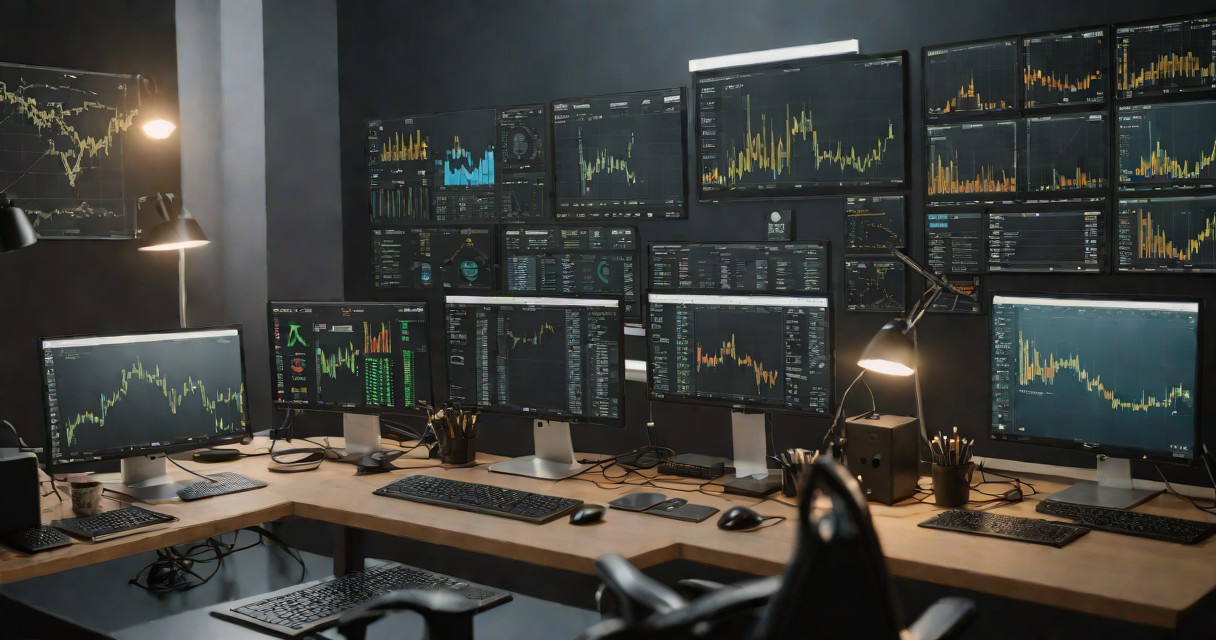
The Bangalore Tech Worker's Trading Advantage
Something unusual has been happening in Bangalore's IT corridors. Walk into any mid-to-large tech company cafeteria in Whitefield, Electronic City, or Manyata Tech Park during lunch break, and you will find clusters of software engineers huddled around phone screens — not watching Instagram reels, but analysing Nifty option chains and placing trades on Zerodha Kite.
Bangalore's IT professionals have a genuine structural advantage in trading that most do not fully exploit. They earn Rs 15-50 lakh per year (or more at FAANG-equivalent companies), giving them risk capital that most Indian traders lack. They understand data, probability, and systems thinking — the exact skills that separate profitable traders from the 89% who lose money. And many of them have flexible work schedules with the ability to check markets between sprints and standups.
But having advantages and using them effectively are different things. I have seen brilliant engineers who can design distributed systems at scale but blow up Rs 5 lakh trading accounts because they approach markets with the same certainty they apply to code. Markets are not deterministic. The most important thing a systematic approach teaches you is managing uncertainty, not eliminating it.
After-Hours Forex Trading: The Real Opportunity for IT Professionals
NSE equity markets run from 9:15 AM to 3:30 PM IST — exactly when most tech professionals are working. Sure, you can place bracket orders and GTTs before market open, but active intraday trading during these hours is impractical if you are on a project with deadlines.
This is where international forex trading becomes genuinely compelling for Bangalore tech workers. The global forex market runs 24 hours, Monday to Friday. The sessions that matter for Indian traders:
| Forex Session | IST Timing | Best Pairs | Why It Works for IT Professionals |
|---|---|---|---|
| Asian Session | 5:30 AM - 2:30 PM | USDJPY, AUDUSD | Morning before standup or late morning break |
| London Session | 1:30 PM - 10:30 PM | EURUSD, GBPUSD, XAUUSD | Overlap with afternoon work hours and evening |
| New York Session | 7:00 PM - 2:30 AM | EURUSD, USDJPY, US indices | After work hours — prime time for most tech workers |
| London-NY Overlap | 7:00 PM - 10:30 PM | All major pairs | Highest liquidity, best spreads, perfect timing |
The London-New York overlap from 7:00 PM to 10:30 PM IST is the sweet spot. You have finished work, had dinner, and can dedicate 2-3 focused hours to trading when global markets are at their most liquid. This is when EUR/USD spreads on Exness drop to 0.0-0.3 pips (on the Pro account), making it the cheapest time to trade.
Several Bangalore-based tech traders I know follow a disciplined routine: NSE swing positions managed through GTT orders during the day, and forex scalping or short-term trades in the 7-10 PM window. The two streams are uncorrelated, providing genuine diversification.
Automated Trading: Where Engineering Skills Pay Off
This is where Bangalore's tech workers have a genuine, unfair advantage. If you can write Python, you can build a trading bot. If you understand APIs, you can connect to the Zerodha Kite Connect API and automate your entire strategy execution.
The most common automated setups I see among Bangalore tech traders:
- EMA crossover bots on NSE: Automated 21/50 EMA crossover detection with auto-order placement. Runs on AWS Lambda or a small EC2 instance. Total cost: Rs 200-500/month for cloud hosting + Rs 2,000/month for Kite Connect API subscription.
- Options selling automation: Strangle or iron condor placement on Nifty weekly options at 9:20 AM every Thursday. Uses the Angel One SmartAPI (free) or Zerodha Kite Connect. The logic is simple enough to code in 200 lines of Python.
- Forex signal replication: Subscribe to a signal service (or build your own signal generator) and auto-execute on MetaTrader 5 through XM or Exness. MT5's MQL5 language is C-like — most engineers pick it up in a weekend.
- News sentiment bots: Use NLP on Twitter/X financial feeds and economic calendar APIs to detect market-moving events and adjust positions automatically. This is more advanced but well within reach for ML engineers at companies like Flipkart, Amazon, or Swiggy.
The Tech Stack for Automated Trading in Bangalore
A practical automated trading setup that many tech professionals run:
- Language: Python 3.10+ with pandas, numpy, and broker-specific SDKs
- Broker API: Kite Connect (Zerodha) at Rs 2,000/month or Angel SmartAPI (free)
- Hosting: AWS/GCP free tier for testing, then a t3.micro instance (Rs 500/month) for live
- Database: PostgreSQL on Supabase (free tier) for trade logging and performance tracking
- Monitoring: Telegram bot for trade notifications and P&L updates
- Backtesting: Backtrader or Zipline libraries with NSE historical data from yfinance or global data feeds
Total recurring cost: Rs 2,500-4,000/month. Less than what most engineers spend on Zomato and Swiggy combined.
Tax Implications: The Part Most Tech Traders Ignore
Bangalore IT professionals often earn enough that their salary already puts them in the 30% tax bracket. Adding trading income on top changes the filing dynamics significantly.
Key tax considerations specific to salaried tech professionals who trade:
- ITR form changes: Once you have F&O or business trading income, you can no longer file ITR-1 or ITR-2. You must file ITR-3, which is more complex. Consider hiring a CA who handles trader returns — expect to pay Rs 3,000-8,000 for filing.
- Advance tax requirement: If your trading profits add Rs 10,000+ to your tax liability beyond what TDS covers from salary, you need to pay advance tax quarterly. Many salaried traders miss this and face 1% per month interest penalties.
- Loss set-off: F&O losses can be set off against salary income in the same financial year (they are non-speculative business losses). This is a significant tax benefit. If you lose Rs 2 lakh in F&O trading, it reduces your taxable salary income by Rs 2 lakh, saving Rs 60,000+ in tax at the 30% bracket.
- International forex TDS: The TDS on forex remittances applies at 20% above Rs 7 lakh under LRS. Plan your remittances to stay under the threshold or budget for the cash flow impact.
- ESOP complications: If you have ESOPs from your tech company AND trading income, the interaction between perquisite tax on ESOPs and business income can be complex. Definitely use a CA for this combination.
Community and Learning: Bangalore's Trading Ecosystem
Bangalore has one of India's most active trading communities, largely driven by the tech professional demographic:
- Zerodha's local presence: Zerodha is headquartered in Bangalore (JP Nagar). They host periodic meetups and Rainmatter (their fintech fund) events. Follow their social media for announcements.
- Trading meetups: Multiple WhatsApp and Telegram groups organise monthly weekend meetups in Koramangala, Indiranagar, and HSR Layout. These are informal sessions where traders share strategies, review trades, and discuss market outlook. Search for "Bangalore traders meetup" on Meetup.com or in Telegram group directories.
- Coworking spaces for traders: Several coworking spaces in Bangalore specifically cater to traders with multi-monitor setups, fast internet, and quiet zones.
- Zerodha Varsity study groups: The Varsity curriculum is free and comprehensive. Several tech companies have informal study groups working through the modules during lunch breaks.
The Risk: When Engineering Confidence Becomes Trading Arrogance
I need to be direct about the biggest risk for tech professionals entering trading. Engineers are trained to find optimal solutions. In code, there IS an optimal approach — a faster algorithm, a more elegant architecture. In markets, there is no optimal. There is only probabilistic, and the probability is always less than 100%.
The most common failure pattern I see among Bangalore tech traders: they build a backtested system that shows 70% win rate, deploy it with too much capital (because "the data says it works"), hit a normal drawdown of 5-6 consecutive losses (which happens even with a 70% win rate), panic because the code "should be working," override the system, and blow up the account trying to recover manually.
The fix is simple but hard to execute: start with paper trading for 2 months, then trade with 10% of your intended capital for 3 months. If the results match backtest expectations, scale up gradually. This systematic scale-up process applies regardless of your technical expertise. Markets do not care about your LeetCode rating.
The Part-Time Trading Schedule for IT Professionals
Here is a realistic weekly trading schedule designed for a Bangalore tech worker with standard 9 AM-6 PM work hours:
- Sunday evening (8-9 PM): Weekly market review. Check Nifty weekly chart, review sector performance, update watchlist on Tickertape. Plan the week's potential trades.
- Monday-Friday mornings (8:30-9:10 AM): Before market opens, finalise orders. Place GTT or AMO (After Market Orders) on Zerodha Kite. Takes 10-15 minutes.
- During work (10:30 AM, 12:30 PM, 2:30 PM): Three quick checks — 2 minutes each during coffee or bathroom breaks. Look at positions, check if any alerts triggered. Do NOT execute impulsive trades during these checks.
- Evenings (7:00-10:00 PM, 2-3 nights per week): Forex trading on EUR/USD, GBP/USD, or gold through Exness during London-NY overlap. This is dedicated, focused trading time — not while watching Netflix.
- Post-market (3:30-4:30 PM, if WFH): Review day's trades, update journal, run evening scanners. If in office, do this at 7 PM before forex session.
Total time commitment: 5-8 hours per week. Enough to run a swing trading strategy on NSE and a short-term strategy on forex without impacting your primary career. The key discipline: NEVER trade during meetings, never chase intraday moves from your work desk, and never let trading distract from the job that funds your trading account.
The tech professionals who succeed at trading in Bangalore share one common trait: they treat their trading P&L with the same rigor they apply to production metrics — tracking everything, running post-mortems on losses, and making data-driven adjustments. Apply your engineering discipline to risk management, not to prediction, and you have a genuine edge.