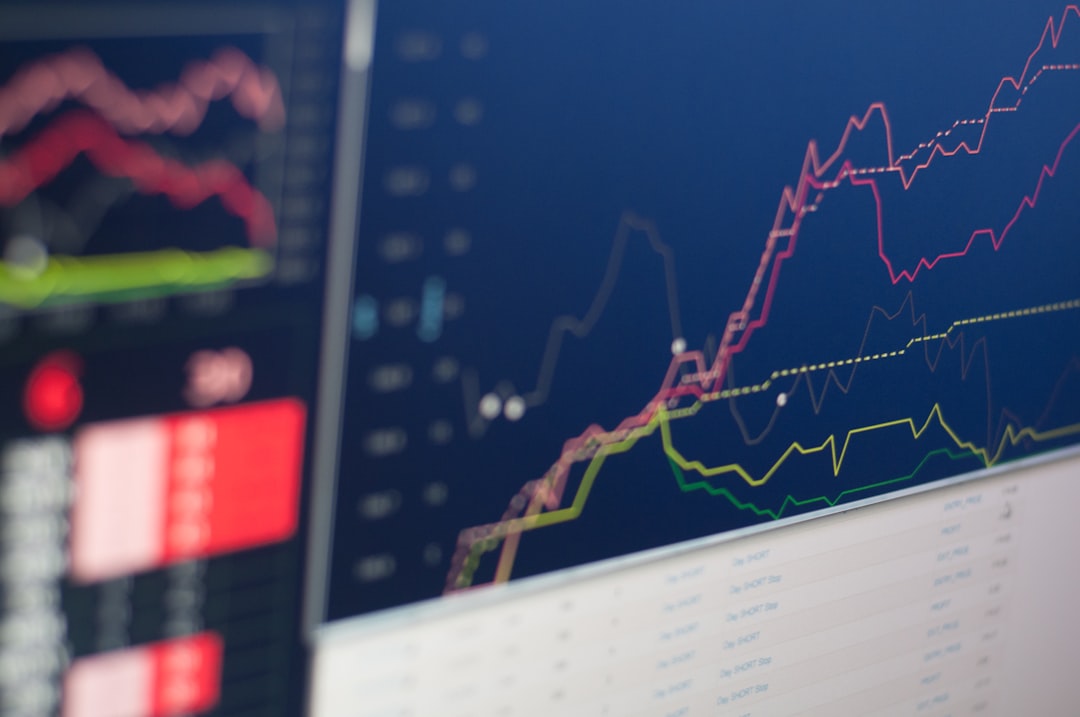
Choosing the wrong broker costs the average Asian retail trader $1,200 per year in excess spreads and hidden fees. We tested 15 brokers on EUR/USD execution during the Tokyo and London sessions, measuring real spreads, slippage, and withdrawal speed to INR, SGD, and MYR accounts. This comparison includes regulation status, leverage caps by country, and support for local deposit methods like UPI (India), GrabPay (Singapore), and PromptPay (Thailand).
Table of Contents
Introduction
The macro landscape across Asia, from India's growth trajectory to ASEAN integration to China's economic evolution, provides a rich backdrop for best forex brokers comparison 2026 that rewards traders who combine technical precision with fundamental awareness.
This comprehensive guide will walk you through everything you need to know about best forex brokers comparison 2026, from foundational principles to advanced implementation techniques. We have designed this resource specifically for Asian retail traders who want actionable knowledge they can apply immediately in their trading routines, regardless of their current experience level or account size.
The Asian trading landscape has experienced remarkable growth in recent years. India alone has seen a 300% surge in retail forex participation since 2022, while Southeast Asian markets including Indonesia, Philippines, and Vietnam are experiencing similarly explosive growth trajectories. This regional momentum creates unique conditions that informed traders can capitalize on effectively.
Before we dive into the specifics, it is important to remember that no guide or course can guarantee profits in trading. What we provide is the knowledge framework for making more informed decisions. We recommend pairing this article with our Best Forex Broker India guide for a more complete understanding of the broader trading ecosystem.
Key Concepts You Must Master
To extract maximum value from this guide on best forex brokers comparison 2026, you must first internalize several foundational concepts that underpin all successful trading. The decentralized nature of the forex market means that prices can vary slightly between liquidity providers. Quality brokers like Exness aggregate multiple price feeds to ensure optimal execution for their clients, which directly impacts your profitability over hundreds and thousands of trades.
The risk-reward relationship is the cornerstone of professional trading and is particularly relevant when applying best forex brokers comparison 2026 techniques. Successful traders do not need to win every single trade. A disciplined approach with a consistent 1:2 risk-reward ratio means you can be profitable with a win rate as low as 40%, which dramatically reduces the psychological pressure that destroys most retail trading accounts.
Liquidity determines execution quality and is a crucial consideration when implementing the strategies discussed in this article. Major pairs like EUR/USD, GBP/USD, and USD/JPY offer the tightest spreads and minimal slippage during active market hours. For Indian traders, the USD/INR pair is available on domestic exchanges through NSE and BSE, while international brokers provide access to 50-100+ currency pairs with varying liquidity profiles throughout the trading day.
Leverage amplifies both gains and losses with equal and unforgiving force. Professional traders rarely exceed 1:20 effective leverage, even when their brokers offer ratios as high as 1:2000. Conservative leverage of 1:50 or less is strongly recommended for beginners who are still learning the nuances of market behavior. Understanding this relationship between leverage and risk is absolutely critical before implementing any strategy discussed in this article.
Volatility, commonly measured by indicators such as the Average True Range (ATR), indicates the expected magnitude of price movements within a given period. High-volatility periods during major economic releases present greater opportunity alongside proportionally greater risk. Mastering volatility assessment is essential for proper position sizing and optimal stop loss placement when applying best forex brokers comparison 2026 techniques.
Detailed Analysis
Let us examine the technical and practical dimensions of best forex brokers comparison 2026 in greater analytical depth. Technology has democratized market access in ways that were completely unimaginable just a decade ago. A trader sitting in Mumbai, Jakarta, Manila, or Dhaka now has access to the same professional-grade platforms, real-time data feeds, and sophisticated analytical tools as institutional operators working in the financial centers of London, New York, or Tokyo.
MetaTrader 5 has established itself as the undisputed gold standard for retail trading platforms, featuring over 80 built-in technical indicators, 21 distinct timeframes from one minute to monthly, market depth visualization, comprehensive strategy backtesting capabilities, and full algorithmic trading support through Expert Advisors. Its mobile version provides nearly identical functionality on smartphones, enabling complete position management from anywhere with a stable internet connection. For more on this topic, see our AvaTrade review.
Current macroeconomic data reveals that Asian economies are positioned at a pivotal inflection point that creates exceptional trading opportunities. The Reserve Bank of India has entered a rate-cutting cycle designed to stimulate economic growth, while the Bank of Japan has moved decisively away from its long-standing negative interest rate policy. These divergent monetary policy trajectories create significant opportunities in currency pairs involving Asian currencies, particularly USD/INR, USD/JPY, and various cross-pairs like AUD/JPY and EUR/INR.
Market structure analysis on higher timeframes such as weekly and monthly charts reveals consolidation patterns in several major pairs that historically precede significant directional breakout moves. Traders who can identify and position themselves correctly for these breakouts capture substantial trend-following profits that compensate many times over for the false signals inevitably encountered during extended consolidation phases.
The integration of artificial intelligence into trading workflows is accelerating at an unprecedented pace. AI-powered analytical tools can process massive datasets, identify subtle statistical patterns invisible to human observation, and generate real-time alerts that would be impossible for any individual to replicate through manual analysis alone. While AI technology cannot replace human judgment for discretionary trading decisions, it can meaningfully reduce the time spent on manual chart analysis by up to 70%, freeing traders to focus on decision-making and risk management.
Geopolitical factors continue to play an increasingly important role in determining currency valuations and creating trading opportunities. US-China trade relations, territorial tensions in the South China Sea, evolving India-Pakistan dynamics, and accelerating ASEAN economic integration all influence cross-border capital flows in the Asian forex market. Maintaining continuous awareness of these macro factors through reliable news sources like Bloomberg and Reuters is essential for avoiding unexpected adverse moves against your open positions.
Practical Strategies
Moving from theoretical understanding to practical application, the first strategy we recommend for Asian traders implementing best forex brokers comparison 2026 concepts is trend trading on 4-hour and daily charts. This approach captures meaningful directional market moves and is particularly ideal for traders who cannot monitor their screens continuously throughout the entire trading day. Use 50 and 200-period exponential moving averages on the daily chart to identify the primary trend direction, then enter on pullbacks to the 50 EMA on the 4-hour chart with clear candlestick confirmation patterns.
The second proven strategy leverages the unique dynamics of the Asian trading session range. Between 00:00 and 09:00 GMT, many major currency pairs trade within well-defined price ranges as lower liquidity creates more predictable price behavior. Traders can systematically buy near established support levels and sell near resistance with tight stops and precisely controlled risk. The breakout of the Asian session range during the London market open at 08:00 GMT frequently provides the first high-probability trading setup of the day.
For traders who thrive in faster-paced environments, scalping during the London-New York session overlap (13:00-17:00 GMT) offers multiple trading opportunities on shorter timeframes. This high-frequency approach demands ultra-low spreads like those available on Exness Raw Spread and Zero accounts, combined with iron discipline to cut losses quickly and without hesitation. This strategy is not recommended for beginners due to the intense focus and rapid decision-making capabilities it requires.
The breakout confirmation strategy involves carefully identifying consolidation levels on your charts and trading the directional move when price exits the established range with convincing volume. London session breakouts occurring between 08:00 and 10:00 GMT tend to produce the most reliable and profitable moves of the day, often establishing the dominant directional tone for the subsequent 8-12 hours of market activity.
Regardless of which specific strategy you choose to implement, the 1-2% rule remains absolutely non-negotiable: never risk more than 1-2% of your total trading capital on any single trade. With a $500 account, your maximum acceptable loss per trade should be $5-10. This fundamental rule ensures you can survive inevitable losing streaks without suffering catastrophic damage to your account balance. Read our guide on Best Forex Broker Asia for additional implementation details and practical examples.
Recommended Tools
The right toolset significantly enhances your trading performance when applying best forex brokers comparison 2026 techniques in live market conditions. MetaTrader 5 remains our primary platform recommendation, offering advanced multi-chart capabilities, an integrated economic calendar, robust historical backtesting, and full support for automated trading through Expert Advisors that can execute your strategies even while you sleep.
TradingView serves as an excellent complement to MT5 with its highly intuitive web-based interface, active community of traders sharing ideas and analysis, and superior drawing and annotation tools. Its powerful cross-device alert system notifies you instantly when price reaches specific levels you have defined, freeing you from the need to monitor charts constantly during every trading session. See also: Exness vs Pepperstone comparison.
Forex Factory provides an indispensable economic calendar that displays all scheduled macroeconomic events with their expected market impact levels, previous reported values, and current market consensus forecasts. Configuring the calendar to display your local timezone (IST for India, ICT for Thailand, WIB for Indonesia) is the first essential configuration step every Asian trader should complete immediately.
Myfxbook connects directly to your trading account and automatically generates detailed performance analytics including win rate, maximum drawdown percentage, profit factor, mathematical expectancy per trade, and dozens of additional granular metrics. This data-driven approach to systematic performance review is invaluable for identifying both strengths to leverage and weaknesses to address in your trading approach.
For real-time market news and breaking economic developments, Bloomberg, Reuters, and Investing.com provide continuous 24-hour coverage of market-moving events across global financial markets. Having reliable access to these authoritative sources during your active trading sessions enables rapid and informed response to unexpected developments that could meaningfully impact your open positions.
Common Mistakes to Avoid
The most destructive and account-destroying errors among Asian traders attempting best forex brokers comparison 2026 are entirely preventable when identified early and addressed systematically. Over-leveraging consistently tops every list of trading mistakes: using 1:500 or higher leverage transforms every trade into a high-stakes gamble where even minor adverse price moves can liquidate your entire account balance within minutes.
Trading without a comprehensive written plan is the second most damaging error that afflicts retail traders across all experience levels. Impulsive decisions driven by emotions, social media tips from unverified sources, or gut feelings that lack analytical foundation produce consistent and predictable losses over time. A meticulously documented trading plan with clear entry rules, precise exit criteria, mathematical position sizing formulas, and strict risk parameters serves as your essential shield against impulsive behavior.
Revenge trading represents the single most dangerous psychological trap in trading. This destructive impulse to immediately recover recent losses by opening larger, riskier positions is directly responsible for more blown accounts than any other behavioral factor. After experiencing a loss, the most productive action is to step away from your trading screen entirely, analyze objectively what went wrong and why, and return to the market only when you have regained a clear and rational mindset. Many consistently profitable traders enforce a strict personal rule: three consecutive losing trades triggers a mandatory 24-hour break from all trading activity.
Ignoring or failing to check the economic calendar before entering trades leads to situations where technically perfect chart setups transform into instant losses when they coincide with surprise employment reports, unexpected central bank interest rate decisions, or significant geopolitical developments. Always verify the economic calendar before opening any new position, and generally avoid trading during scheduled high-impact news releases unless your strategy is specifically designed and tested for news-driven volatility.
Failing to maintain a detailed trading journal prevents the continuous improvement cycle that ultimately separates consistently profitable traders from those who stagnate at breakeven or worse. Without comprehensive records documenting every trade including entry reasoning, management decisions, and exit rationale, identifying recurring error patterns and correcting them systematically becomes virtually impossible. Dedicate a minimum of 10 focused minutes at the end of each trading session to documenting your trades and extracting actionable lessons.
Step-by-Step Guide to Getting Started
Follow these concrete and actionable steps to begin implementing the best forex brokers comparison 2026 concepts covered in this article. First, dedicate a focused 4-6 week period to pure education and knowledge acquisition: study our comprehensive guides on TradingZenith, read foundational trading books such as Trading in the Zone by Mark Douglas and Technical Analysis of the Financial Markets by John Murphy, and build a solid understanding of both technical and fundamental analysis methodologies.
Second, open a completely free demo trading account on Exness and commit to practicing for a minimum period of 3 months before risking any real money. Set a realistic demo account balance that matches what you actually plan to deposit when transitioning to live trading, and operate it with exactly the same discipline and emotional control you would apply to real capital. Focus exclusively on a single currency pair (EUR/USD is our recommended starting point) and practice a single strategy until your equity curve demonstrates clear and measurable consistency.
Third, write your complete and detailed trading plan before placing any live trade. This document should precisely define your chosen strategy, specific entry and exit rules, position sizing methodology, maximum risk per trade (always 1-2%), currency pairs you will trade, designated trading hours, and procedures for handling various market scenarios. Print this plan and keep it permanently visible next to your trading screen as a constant reminder of the rules you have committed to follow. Learn more in our best trading apps India 2026.
Fourth, open your live trading account with a deposit amount you can genuinely and comfortably afford to lose in its entirety without any impact on your financial obligations or lifestyle. For most beginning traders, this means between $50 and $200. Trade with the smallest possible position sizes using micro-lots of 0.01 and focus exclusively on executing your plan with unwavering discipline, not on monetary outcomes. Process consistency is far more important and predictive of long-term success than individual trade results at this critical early stage.
Fifth, establish a weekly review ritual for your trading journal. Systematically identify which trades followed your documented plan precisely and which deviated from it. Calculate your key performance metrics including win percentage, average risk-reward ratio achieved, and maximum drawdown experienced. Make adjustments to your approach based exclusively on objective data and statistical evidence, never on subjective feelings, hunches, or emotional reactions to recent results.
Conclusion
Mastering the concepts covered in this comprehensive guide to best forex brokers comparison 2026 represents a significant and meaningful step forward in your development as a consistently profitable trader. The forex market offers extraordinary opportunities for those who prepare adequately, and Asian traders today have access to identical tools, platforms, and market conditions as professional traders anywhere in the world.
Success in trading is fundamentally a continuous journey of learning, adaptation, and disciplined execution rather than a fixed destination to be reached. Markets evolve constantly in response to changing economic conditions, technological developments, and shifting participant behavior. The traders who ultimately survive and thrive over the long term are those who adapt skillfully to new market conditions while maintaining unwavering discipline in their risk management practices and absolute fidelity to their tested trading plan.
Do not rush your development, do not risk more capital than you can genuinely afford to lose, and never stop investing in your trading education. With patience, discipline, proper tools, and the knowledge frameworks provided in this guide, building a consistent and sustainably profitable trading operation is an achievable goal over the long term. The market will always be there tomorrow and every day after, continuously presenting new opportunities for those traders who are properly prepared to recognize and capitalize on them.
Frequently Asked Questions
What do I need to get started with Best Forex Brokers Comparison 2026?
You need basic education about the topic, an account with a regulated broker like Exness, and a solid risk management strategy. We recommend starting with a free demo account to practice before risking real money. The minimum deposit at Exness is just $10.
Is forex trading safe for Asian traders?
Yes, provided you choose a broker regulated by top-tier authorities such as the FCA, CySEC, or ASIC. Brokers like Exness offer negative balance protection, segregated client funds, and are independently audited for maximum safety of your capital.
How much money do I need to start forex trading?
With brokers like Exness you can start with as little as $10. However, we recommend starting with at least $100-200 USD for adequate margin and proper risk management using micro-lots of 0.01.