Volatility is the oxygen of profitable trading. Without volatility, there are no price movements to capture, no trends to follow, and no ranges to fade. Indian and Asian traders who understand how to measure, anticipate, and exploit volatility shifts have a structural advantage because volatility itself is more predictable than price direction. Markets alternate between compression and expansion phases with remarkable regularity, and the tools to detect these transitions are freely available on every MT5 platform. The question is not whether volatility will expand or contract but when and how to position yourself to profit from the transition. For a detailed breakdown of fees and features, see our XM broker review for Indian traders.
Measuring Volatility with ATR
Average True Range (ATR) quantifies volatility by measuring the average of true ranges over a specified period. ATR(14) on the daily chart tells you the average daily range of a pair over the past 14 days. If EUR/USD ATR(14) reads 0.0075, the pair moves approximately 75 pips per day on average. This single number provides the foundation for volatility-adjusted position sizing, stop-loss placement, and profit targeting.
When ATR rises above its 20-period moving average, volatility is expanding. This is the environment where trend-following and breakout strategies thrive. When ATR falls below its average, volatility is contracting. This is the environment where range-trading and mean-reversion strategies work best. The ability to identify the current volatility regime prevents mismatching your strategy to market conditions.
ATR-based stop-losses adapt automatically to current volatility. Set your stop at 1.5 to 2 times ATR from your entry price. During high-volatility periods, your stop widens to accommodate larger price swings, preventing premature stops. During low-volatility periods, your stop tightens to capture smaller moves efficiently. This dynamic approach produces more consistent results than fixed pip-based stops across varying market conditions.
Bollinger Band Squeeze and Expansion
Bollinger Bands with 20 SMA and 2 standard deviations create a visual envelope around price that expands during high volatility and contracts during low volatility. The Bollinger Band squeeze occurs when the bands narrow to their tightest point in 20 or more periods, signaling compressed volatility that will eventually expand. This squeeze is one of the most reliable anticipatory signals in technical analysis.
Trade the squeeze expansion: when Bollinger Bands reach minimum width and a candle closes outside the band, enter in the breakout direction with a stop at the opposite band. The narrow bands ensure a tight stop-loss distance while the ensuing volatility expansion provides extended profit potential. On EUR/USD during London hours, Bollinger squeezes that resolve in the first hour of the session produce the most reliable expansion moves. Related reading: scalping strategies for Asian markets.
During expanded Bollinger Band conditions (bands at maximum width over 20 periods), switch to mean-reversion trading. Price touching the outer band after a period of expansion often marks a volatility peak. Enter counter-trend at the outer band with a target at the 20 SMA (middle band). This fade strategy captures the natural tendency of volatility to revert to its mean after extreme expansion episodes.
India VIX and Its Correlation with Trading Opportunity
India VIX (available on NSE) measures the expected volatility of Nifty 50 over the next 30 days. When India VIX is below 12, markets expect low volatility and option premiums are cheap. When above 20, markets expect high volatility. India VIX above 25 signals fear and potential panic. Indian traders can use VIX as a market regime indicator that guides both domestic Nifty trading and international forex strategy selection.
Low VIX environments favor Nifty option selling strategies such as iron condors that collect premium during calm periods. High VIX environments favor Nifty option buying and forex trend-following as directional moves are larger. The correlation extends to USD/INR: when India VIX spikes, the rupee typically weakens as foreign investors reduce Indian exposure, creating forex trading opportunities.
Track India VIX alongside global VIX (CBOE VIX) for a comprehensive volatility dashboard. When global VIX and India VIX both spike simultaneously, the risk-off environment supports yen strength, Dollar strength, and weakness in commodity currencies like AUD and NZD. This correlation chain from VIX to forex provides a fundamental framework for identifying the highest-probability forex trades during volatility events.
Session-Based Volatility Patterns for Asian Traders
Forex volatility follows a predictable intraday pattern. The Asian session (05:30 to 13:30 IST) has the lowest volatility for EUR and GBP pairs but moderate volatility for JPY and AUD pairs. The London session (13:30 to 22:30 IST) has peak volatility for all major pairs. The New York session (19:00 to 03:30 IST) has moderate to high volatility with the London-NY overlap producing the daily maximum.
Indian traders can exploit this pattern by using different strategies for each session. Morning (Asian): range-trade USD/JPY using the narrow Asian range. Afternoon (London open): breakout-trade EUR/USD and GBP/USD as volatility expands from the Asian range. Evening (London-NY overlap): trend-follow the established London direction on your preferred pair. This session-adaptive approach maximizes the edge available at each point in the daily volatility cycle. For more on this topic, see our breakout trading strategy guide.
Weekly volatility patterns also exist. Monday typically has below-average volatility as the market establishes the week direction. Tuesday through Thursday offer peak weekly volatility. Friday volatility declines as traders reduce positions before the weekend gap risk. Concentrate your trading activity in the Tuesday-to-Thursday window for maximum volatility and avoid entering new positions on Friday afternoon unless the setup is exceptionally strong.
Building a Volatility Dashboard
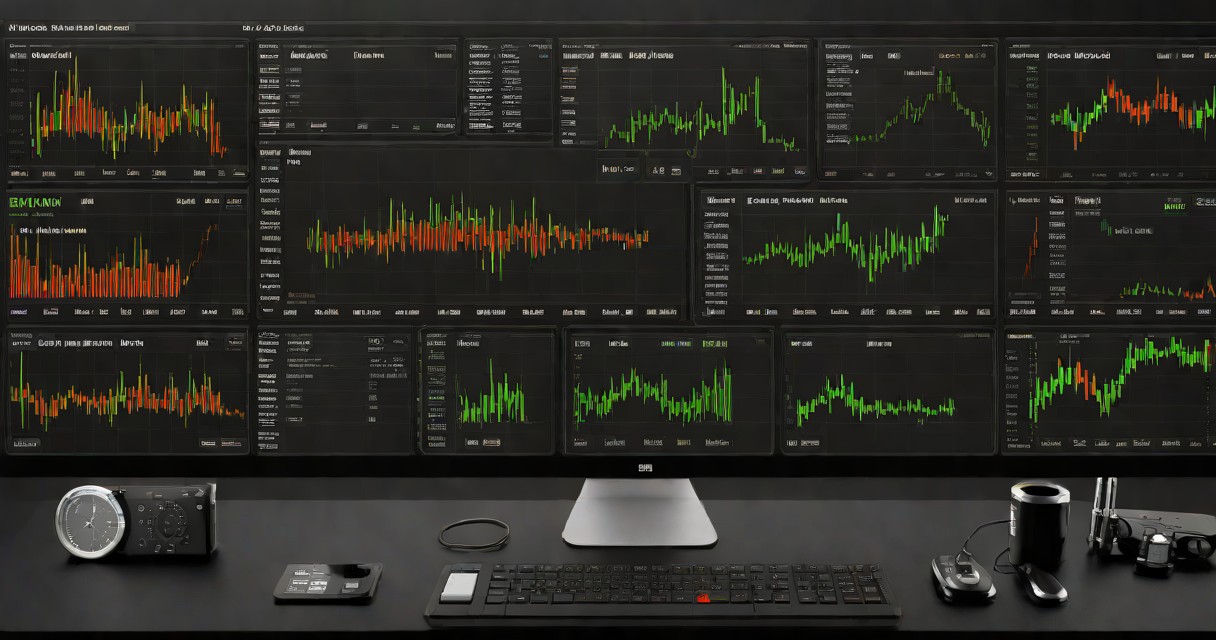
Create a TradingView or MT5 layout with the following volatility indicators: ATR(14) on your primary pair daily chart, Bollinger Band Width indicator (the numerical distance between upper and lower bands) as a squeeze detector, India VIX chart if you trade Nifty, and a currency strength meter showing which currencies are moving most actively. This dashboard provides a real-time volatility assessment before you take any trade.
Add economic calendar event markers to your dashboard. High-impact events like NFP, FOMC, and RBI announcements create scheduled volatility spikes. Positioning your strategy to exploit post-event volatility expansion rather than the random pre-event chop improves your results. Use our economic calendar guide for IST-adjusted event timing.
Review your volatility dashboard every morning before your trading session begins. Ask three questions: is current volatility expanding or contracting relative to the 20-day average? Which session am I trading and what is the expected volatility for that session? Are there scheduled events today that will create volatility spikes? The answers to these questions determine whether you deploy breakout, trend-following, or mean-reversion strategies for the day.
Frequently Asked Questions
What is the best volatility indicator for forex?
ATR (Average True Range) is the most versatile volatility indicator because it quantifies volatility as a single number usable for stop-loss placement, position sizing, and regime detection. Bollinger Bands provide visual volatility context. India VIX provides a forward-looking volatility expectation for Indian markets.
How does volatility affect my trading strategy?
High volatility favors trend-following and breakout strategies with wider stops and larger targets. Low volatility favors range-trading and mean-reversion with tighter stops and smaller targets. Mismatching your strategy to the volatility regime is a common cause of losing streaks. For more on this topic, see our price action trading techniques.
When is forex volatility highest?
The London-New York overlap from 18:30 to 22:30 IST produces the highest daily volatility. Tuesday through Thursday are the most volatile weekdays. NFP week, FOMC weeks, and periods of geopolitical tension produce the highest weekly and monthly volatility.
Should I avoid trading during low volatility?
Not necessarily. Low-volatility periods suit mean-reversion and range-trading strategies with smaller position sizes and tighter targets. The key is matching your strategy to the conditions rather than forcing a high-volatility strategy onto a quiet market.
Risk Disclaimer: Trading involves high risk. Educational content only. Contains affiliate links.